

As finance teams look toward 2026, AI is everywhere, but real impact remains uneven.
We sat down with Stampli’s CEO, Eyal Feldman, to talk about what’s actually working in AI for finance, how far invoice-level automation can go, and how procure-to-pay changes the role finance plays in spend decisions.
The discussion makes one point clear: automation at the back end is no longer enough. Control must move upstream, before spend is committed, and AI must operate inside real workflows, not outside of them.
From Invoice Control to Spend Control
Q: Stampli started in AP, then expanded into payments, and now procurement. What operational gap are finance teams still struggling with that made a full procure-to-pay platform the logical next step?
Eyal: “When you think about it, accounts payable has core tasks, right? They’re making sure that the invoice is legit, they’re making sure that it’s allocated properly, they’re making sure that it’s what they actually ordered, and they’re making sure that this is what we’ve received. And then they facilitate the payment.
What you see in practice is that there are also invoice approvals. And if you think about it, it’s kind of funny, because invoices are transactions that already happened. An invoice was sent. So what’s the point of approving this invoice now that it already happened? It’s not like you can’t pay. You bought it, you already committed, and you have to pay.
So in essence, a lot of the approvals are really more like acknowledgment of the purchase. In the real sense of finance controlling the spend of the company, it’s not helpful anymore if you do it at the timing of the invoice. The time to do it is before that service or product was acquired to begin with.
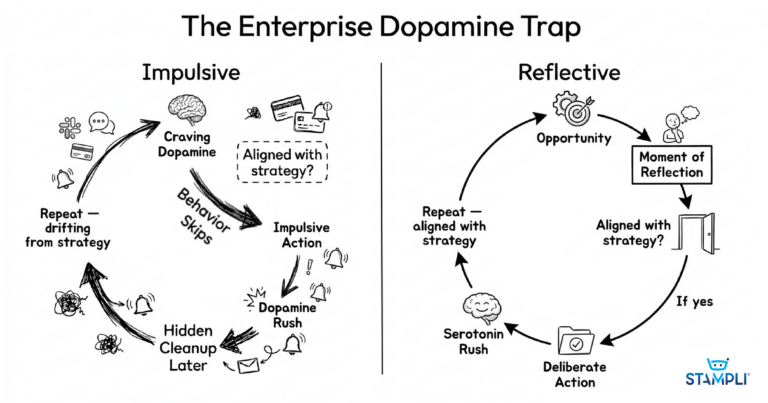
If finance wants to not just be the rubber stamp at the end that only defines how things are allocated financially, but wants to really impact what is spent and how it’s spent, there needs to be a preliminary process of procurement which is managed. That’s the way you come to impact before the transaction happens, and then an approval means something. Requiring a requisition and its approval is not about making things harder or adding bureaucracy, it’s about creating this moment of reflection. Do we really need it, is it in our budget, how are we going to use it etc.”
Q: But isn’t procurement traditionally difficult to implement?
Eyal: “It was traditionally so hard to implement because there’s often pushback from within the organization, a lot of resistance. The organization many times perceives it as a burden: ‘Oh, finance is making it hard on us to buy by introducing more bureaucracy.’
And traditional procurement systems were really a hassle, very annoying user interfaces. You had to be very knowledgeable about what you were buying. It was very cumbersome.
What we found is that we can actually help finance teams introduce a procurement process that feels seamless, requires no prior knowledge or experience by making it conversational and making it flow naturally between all the required stakeholders. Nobody needs to be trained. With all the AI technology today, you can make it almost flawless and very user-friendly, where everybody can benefit from that one process. Not only does it make it easy for finance to create that moment of reflection, it also gives the requester the confidence it will be handled effectively by whoever needs to handle it.”
Q: How does Stampli’s approach to procurement differ from traditional solutions?
Eyal: “When we thought about procurement, we took it even bigger than just procurement. We look at it as anything that anybody in the company requests or needs, and how do you assure internally that this is actually needed? How do you make the decision that the requirements were gathered seriously, and there is a good understanding of what we need?
You can have whoever you want within the organization be part of that moment of thought: do we really need it? And then approve it. It flows really easily, all the way through its fulfillment and into accounts payable eventually. That’s what we’ve built, together with a lot of the philosophy that Stampli implemented with AP, collaboration, giving people the context, making it very easy and intuitive, no training needed, leveraging AI in every aspect of the process where AI can do the job for the user.
We’ve made it possible for organizations to introduce a full procure-to-pay process, and even much more than just procure-to-pay, with requests that can become different outcomes like service tickets, credit cards, or anything else. We make it very easy for them to implement and get buy-in from the rest of their organization.
The outcome is that now they can control things before they happen, they introduce this moment of genuine reflection culture into the organization and it can create real impact. The whole process becomes much easier and fully automated, because you have all these preliminary steps that the invoice can be matched against at the end of the day.”
Cutting Through the AI Noise
Q: There’s lots of noise around AI in finance right now. Where do you think AI is genuinely delivering value today? And where do you see it being oversold?
Eyal: “AI is the biggest revolution in tech that has ever happened. It’s changing everything.
Having said that, if you look today, practically speaking, you still don’t see in a lot of areas the efficiencies that you may have expected to see materialize. There’s a lot of marketing, a lot of fog and smoke everywhere when it comes to talking about AI.
I think it’s very typical for the beginning of this technology revolution. You could see something very similar when the internet started, there was a lot of noise. The fact that it was noise didn’t mean that eventually it didn’t change everything, and here it’s going to be even bigger than that.
At the end of the day, when you’re looking at finance, the whole job of finance is to make sure things are accurate. A lot of other parts of the organization can kind of go around it, can tolerate some inaccuracies, but when it comes to finance, this is where the line is. It has to be accurate.
That creates a situation where in a lot of areas of finance, AI could do a big part of the work, but finance teams will still feel the urge to validate everything.”
Q: So how does Stampli’s AI approach actually deliver measurable value?
Eyal: “When we think about AI at Stampli, we make sure that it’s not about chatbots or other things that may look nice on a slide. The way we look at our AI, which is our workflow embedded agentic solution, is that we are measuring every task that a user does within Stampli, in every part of the process: How much of that task is done by the user, and how much is done by our AI?
Our AI is a rich collection of many models, most of them are built on the fly with zero human intervention, leveraging Stampli’s rich AP process data and how specific tasks are effectively done. It’s all in the data in order to do the work on behalf of the users, allowing users to focus only on things that are very unique.
What we’ve seen is that we’re able to eliminate the vast majority of the work that users are doing today. Stampli performs on average 86% of the finance work across 2500+ unique fields for our customers.
Different customers apply different logic and different custom fields, texts, ERP related fields, and Stampli’s AI covers 2,500 different fields otherwise users had to spend time coding. This represents 100% coverage of all customers’ fields.
This is what companies need to look at: How much work has AI effectively taken from me? If I needed 10 people to do that work before, and now I can do it with 2, those are the efficiencies. If I still need those 10 people, and if I’m growing my business and will need another 2, 5, or 10 people, then this AI is more like a nice toy to have, but it’s not going to change the game for you.
At Stampli, this is what we are focused on. We measure real time how much work the user still has to do versus how much our AI is successfully doing on their behalf. The vast majority of the work today is done by Stampli’s AI. We have some extreme stories of customers that grew their business to the level that would require them to hire something like 50 more people in accounts payable, and they didn’t even have to hire one.”
Q: What should companies watch out for when evaluating AI solutions?
Eyal: “You need to make sure that the system you’re implementing has the process coverage you need and the AI that is able to do the needed work within the sophistication that you design for yourself inside your organization, because every organization is different.
It’s important to recognize that, and I think it’s a challenge for organizations because there’s a big knowledge gap between what the buyer knows and what the vendors know. It’s very hard to learn until you actually implement it, but once you implement it, you’ve already invested a lot of time.
It’s really important for everybody to educate themselves, because there are so many different ways of implementing AI. Today, everybody can say they have AI, and it’s genuinely hard to know the difference until you’re already deep into an implementation. The question to ask any vendor is: how much of my actual work will your AI do, and can you show me that in my environment, with my data, my complexity.
There are a lot of great things happening with this revolution, but buyers need to go in with the right questions.”
What Finance Teams Need in 2026
Q: Based on your conversations with customers, what do finance teams actually need from their technology?
Eyal: “At the end of the day, finance and the organization need a process that is very easy to use, doesn’t require resources, and does most of the work by itself, but allows the company to have accurate financial reporting, because finance has to provide accurate reporting, zero mistakes. They need accurate cost accounting, so activity-based costing is very important as well, which requires internal cooperation and not just using general keys of allocation.
They need to be able to apply internal discipline to make sure that what the company is purchasing are things it actually needs to purchase. That eventually affects the bottom line in many different ways. People may spend time buying tools they don’t need. People may think they need something because they have an issue to solve, but they’re focusing on the wrong solution instead of other ways to solve the problem. Many times, there’s just a lack of understanding of the big picture.
Finance is working really hard to bring that reflection and discipline into the organization, and today, you can actually do that without the hassle of making people work really hard with the help of AI that basically serves as an employee along this process.”
The CFO’s Strategic Shift
Q: How do you see the role of the CFO evolving?
Eyal: “The CFO is expected to be a strategic right hand of the CEO, helping the CEO manage the business through the lens of data and numbers.
The reality is that they also have a lot of operational stuff to deal with.
Now, with AI, you can remove a big part of this operational burden, moving away from doing stuff to monitoring stuff.
And you can get much better on the strategic stuff. If you want to provide analysis that is meaningful, you want to move away from just using random keys that don’t really demonstrate how costs should have been allocated. You want activity-based costing and a real understanding of how to allocate costs, so you can differentiate profitability of different products or different lines of business. You can really do that today. You want to invest much more time in real FP&A, in understanding the business and help drive it.
So there’s a move to a more strategic role, a move towards more monitoring versus executing on the operational side. It’s not an easy move, especially for finance, where accuracy is extremely important. But this is where everything is moving right now.”
Looking Ahead
As we look toward 2026, the real divide in finance won’t be between those who adopt AI and those who don’t. It will be between those who use automation to do the same things faster, and those who use it to change what they do.
The “invoice approval” has long been a logical fallacy, a post-mortem control performed after the commitment is already made. True leadership requires moving that “moment of reflection” upstream. It is the transition from recording spend to architecting it.
The real value of this evolution isn’t found in a flashy demo or a marketing slide. It is found in the headcount you didn’t have to hire and the strategic insights you finally have the bandwidth to uncover. In 2026, the question for finance leaders is no longer “How do we automate?” but “What will we build once we are finally free from the manual grind?”