


There is a particular kind of question every finance leader has learned to swallow.
The one about whether you’re quietly overpaying a vendor whose contract no longer matches its invoices. The one about how much margin you’re leaving on the table by paying net-30 bills on day twelve. The one about whether two departments are expensing the same software under different names.
These aren’t idle questions. They’re the questions that move money.
So why do finance leaders swallow them? Not because the questions lack value, but because answering even one usually means opening a project: pulling invoices, checking contract terms, tracing payment timing, reconciling vendor records, and asking an analyst or consultant to spend hours or days proving the answer. That cost is exactly what keeps teams from doing the strategic accounts payable work they would rather focus on. The cost of getting the answer was simply too high.
For years, finance leaders have trained themselves not to ask. That habit became the real subject of our recent customer webinar on Stampli Deep Finance™. The discussion was not just about what finance teams can analyze, but what they have stopped asking because analysis was too costly to pursue.
We expected strong interest, but what we saw was something deeper. Hundreds of business leaders and finance executives attended the full session, with a Q&A. The enthusiasm wasn’t about a new feature. It was about a consistent constraint disappearing.
From Intelligence Scarcity to Abundant Intelligence
For as long as finance has existed, deeper insight has been rationed.
Josh Constine, Venture Partner at SignalFire and an early investor in Stampli, opened the webinar by describing the three options finance leaders have traditionally faced:
- Accept shallow reporting and hunt for patterns manually.
- Hire consultants and wait weeks for answers that may already be outdated.
- Pull analysts and engineers away from strategic work to build custom analyses.
Given those choices, most organizations behaved rationally. They decided in advance which questions justified the cost of investigation and left countless others unexplored.
Constine called this intelligence scarcity. And his core argument was that finance is now moving past it, from intelligence scarcity to abundant intelligence.
When a custom analysis costs a single question instead of weeks of labor, the economics of curiosity change. The limiting factor is no longer analyst bandwidth. It’s the quality of the questions leaders choose to ask.
As Constine put it: “In the AI era, we go from being the creator to the curator, and we go from being the question-answerer to the asker.”
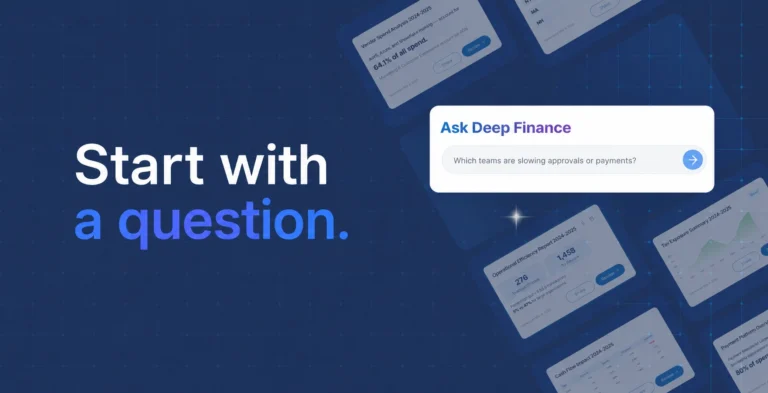
That is the shift this webinar was really about. Once asking costs almost nothing, the advantage moves to finance teams that know which questions are worth asking next, and to the systems that can answer them. Deep Finance is built to be one of those systems, and the rest of this recap explains how it closes the gap between scarce and abundant intelligence.
How Stampli Deep Finance Works
If abundant intelligence is the promise, the mechanics are what make it real. One of the most common misconceptions about AI-powered finance intelligence is that it’s simply a smarter search box layered on top of reporting software.
Eyal Feldman, Co-Founder and CEO of Stampli, spent time explaining why that comparison misses the point.
Traditional custom analysis follows a familiar path:
- Someone interprets your request.
- Engineers build a data model.
- Data pipelines are created.
- Analysts build reports.
- Weeks later, you review the result.
If the analysis isn’t quite right, the process starts over. Natural-language querying may improve the front-end experience, but the underlying limitation remains: answers can only come from structures that were built in advance.
Deep Finance takes a different approach. Instead of querying a pre-built model, it creates a bespoke analysis for every question, drawing on the operating context Stampli already holds.
For each request, Deep Finance effectively assembles the equivalent of a consultant to interpret the question, a data architect to determine relevant sources, an engineering team to retrieve and shape data, an analyst to identify patterns and quantify impact, and a strategist to recommend next actions.
When the analysis is complete, the infrastructure dissolves. No cubes to maintain. No pipelines to update. No reports to redesign when priorities shift. The next question can be entirely different.
Feldman compared the leap to the difference between Siri and ChatGPT. The first generation of assistants operated within predefined limits. The second generation follows human intent wherever it leads.
This is what turns scarcity into abundance in practice. Deep Finance applies that same architectural shift to the spending data already flowing through your procure-to-pay process, turning operating context that used to sit unanalyzed into focused analyses finance leaders can review and act on.
Why Deep Finance Is Different from Traditional Reporting Tools
The distinction matters because many of the most valuable finance questions don’t fit neatly into predefined reports. They require reasoning across systems, documents, and relationships that were never modeled in advance, which is exactly what makes them expensive under the old model and cheap under the new one.
Analyzing Structured and Unstructured Financial Data
One of the most revealing moments of the webinar came when Feldman described where Deep Finance can look for answers. Most finance systems only analyze structured data: fields, codes, categories, and transaction amounts. But some of the richest information in finance never becomes structured.
As Feldman explained: “It’s every word and every letter in every invoice that you have.”
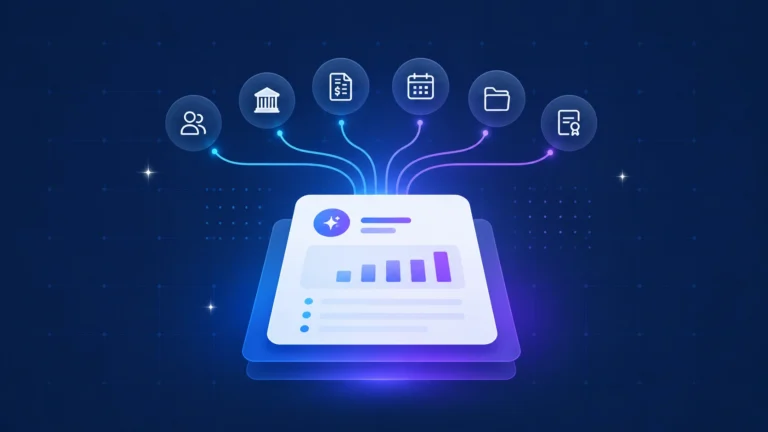
Depending on the question and the account, Deep Finance can draw on the full range of context Stampli already captures, including:
- Invoice contents, down to line items, quantities, service dates, and pricing details
- Vendor agreements and contract language
- Procurement requests and supporting documentation
- The audit trail behind approvals and edits
- Payment activity across Direct Pay and the Stampli Card
It doesn’t pull every source into every analysis. It selects the context that fits the question, then reads across those sources together. That’s what lets it compare what a contract promised against what an invoice billed, even when nobody ever created a field to capture the discrepancy. Much of this depends on how well a system captures unstructured detail in the first place, which is why invoice data extraction software that preserves line-level detail makes the analysis layer richer.
The intelligence comes not only from the data finance teams intentionally capture, but from the information they’ve been storing for years without analyzing.
Real Examples of AI-Powered Finance Intelligence
Will Lynes, Director of Product at Stampli, demonstrated how this capability translates into real financial outcomes. As he noted: “Every one is bespoke, created on the fly, and basically reflects the shape of the data it finds.”
Contract Compliance Analysis
Deep Finance compared invoice line items against contract terms and identified where vendor billing had drifted from agreed pricing. The result wasn’t simply an alert. It quantified the recovery opportunity, the kind of finding that strengthens any vendor management process that depends on holding suppliers to their contracts.
Early Payment Opportunity Analysis
When analyzing payment behavior, Deep Finance found a pattern of net-30 vendors consistently being paid ahead of schedule. It then modeled potential savings opportunities through negotiated early-payment discounts, a lever that directly affects days payable outstanding and working capital.
Software Spend Optimization
In one example, Deep Finance identified software licenses that would cost less if moved from a la carte purchasing into an existing contract structure. The recommendation emerged from analyzing both invoice data and contract language together, surfacing the kind of duplicate spend that preventing duplicate invoice payments is meant to catch but rarely does at the licensing level.
Invoice Validation Against Contracts
Deep Finance validated invoices against contractual agreements vendor by vendor, highlighting both major issues and small discrepancies. The result was full coverage rather than selective sampling, an extension of the discipline behind 3-way invoice matching applied across an entire vendor base at once.
Signal vs. Precision: Building Trust in Finance AI
The most important conversation during the webinar centered on trust. How should finance leaders evaluate AI-generated findings?
Feldman’s answer introduced a useful distinction: “We separate the world into two parts. There is precision, and there is signal.”
Precision belongs to transaction processing. When an invoice is captured, approved, or paid, the numbers must be correct to the cent. Signal serves a different purpose. It identifies where attention should go, and the more specific the question, the stronger the signal becomes.
Deep Finance is designed to surface strong directional intelligence, not to replace financial controls, ERP systems, or established reporting processes. When a finding informs a significant decision, teams can validate the numbers through existing reporting and review the supporting invoices, payments, and documentation behind the recommendation.
The goal isn’t to replace financial rigor. It’s to reveal opportunities that traditional reporting was never designed to uncover.
How AI-Powered Finance Intelligence Enhances Procure-to-Pay
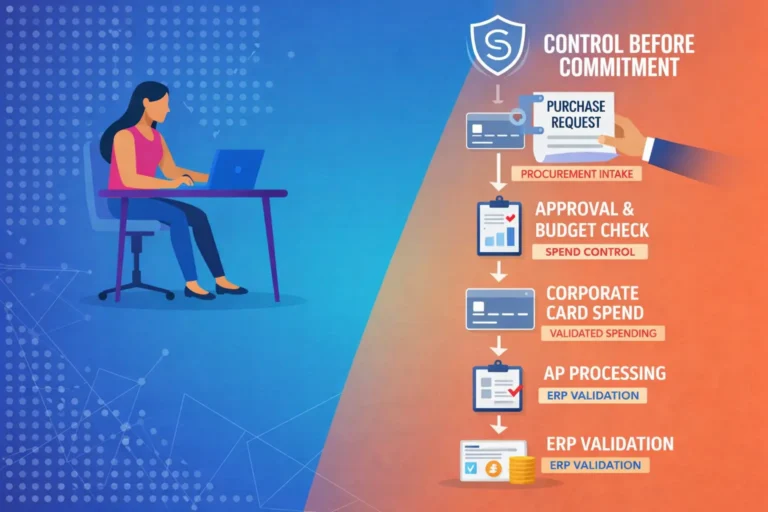
Modern procure-to-pay systems excel at capture. They bring invoices into workflows, route approvals efficiently, and make sure payments happen accurately and on time. The result is an enormous repository of spending data, most of which historically remained underutilized because analyzing it required significant time and resources.
Deep Finance changes that equation. Everything your procure-to-pay process captures, along with much of what it stores without structuring, becomes available for analysis, and the stronger the underlying capture process, the richer the intelligence layer becomes. Rather than competing with AP automation, Deep Finance amplifies its value: one keeps financial operations running smoothly, the other helps leaders understand what those operations reveal.
Why This Matters for Modern Finance Teams
Finance teams generate enormous volumes of invoices, payments, contracts, vendor records, and procurement data. Historically, most of that information remained underutilized because analyzing it required significant time, technical resources, or outside expertise.
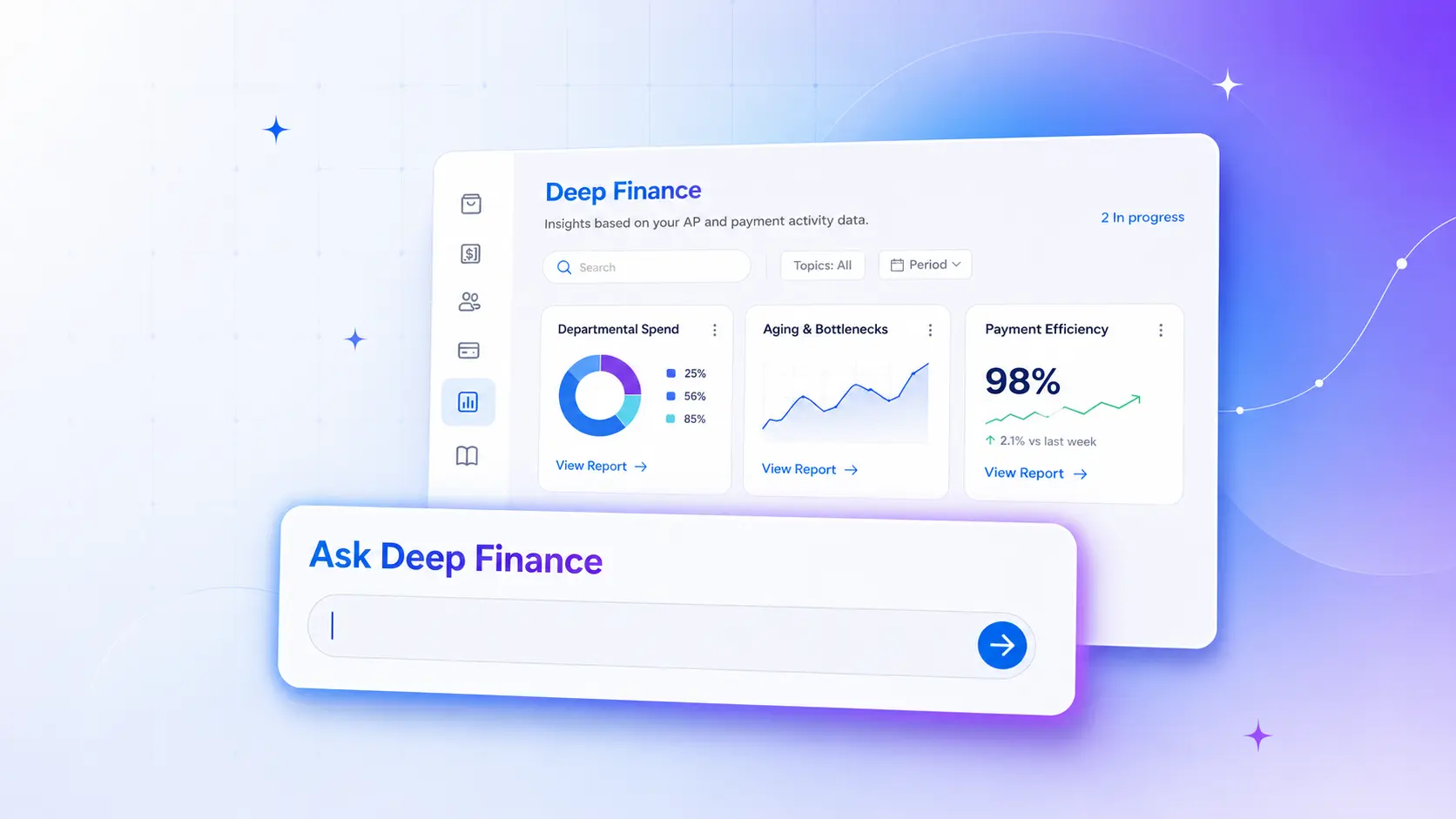
AI-powered finance intelligence changes that equation. By turning both structured and unstructured financial data into insights leaders can act on, Stampli Deep Finance helps finance teams uncover savings opportunities, identify risks, validate assumptions, and make more informed decisions. The same capability supports better spend analysis across the entire vendor base, not just the handful of questions a team could previously afford to investigate.
As the cost of analysis continues to fall, the organizations that benefit most will be the ones willing to ask more questions, and ask better ones.
If you’ve been carrying a financial question for months because answering it felt too expensive or too time-consuming, now may be the right moment to ask it.
Explore Stampli Deep Finance or schedule a demo to see what it uncovers in your own spend.