



Useful AI-assisted finance analysis depends on relevant, permissioned context. The most useful answer to “what data can we use” is the finance, invoice, and AP workflow data already moving through your systems, plus relevant document context where it is available and approved for use. A capable analysis engine with no access to that context produces confident guesses about nothing.
So the question to ask is not “can AI analyze finance data?” It is “what specific data from our operations can support a meaningful analysis, what does the tool actually read, and can we review what it finds before we act?” That last part matters as much as the first.
Why Data Context Determines Analysis Quality
Traditional finance reporting works from structured fields: GL codes, invoice totals, vendor names, payment dates. Those fields are useful for monitoring and compliance, but they represent a fraction of what a finance workflow actually captures. The rest, the detail that gives an analysis depth, lives in line items, terms, documents, and approval trails that no report was designed to read.
This is where the right evaluation question separates tools. Some systems read only structured fields. Others can also draw on document context where it is available. The breadth and relevance of the context a system works from, not just the cleverness of the analysis, is usually what separates a useful finding from a superficial one. When you evaluate a vendor, ask what the system reads, not only what it claims to conclude.
What Deep Finance Reads in Your Stampli Environment
The data behind Stampli Deep Finance™ is the finance, invoice, and AP workflow data already inside your Stampli environment, plus relevant document context where it is available and approved for use. It does not reach into systems outside Stampli. The sources it draws on fall into six areas:
- Invoice contents. Line items, dates, time sheets, and packing slips, not just totals. Reading at the line level is what lets an analysis compare pricing across periods rather than stopping at summary figures. This depends on how invoice data is captured in the first place.
- Audit trail. The requests, questions, and answers that move an invoice through approval. This is the same record that supports a clean AP audit trail, and it shows where steps slow down.
- Vendor documents. W-8 and W-9 forms, contracts, insurance, and billing records captured during your vendor approval process. Comparing what a contract says against what a vendor billed is one of the richest, least examined sources of finance context.
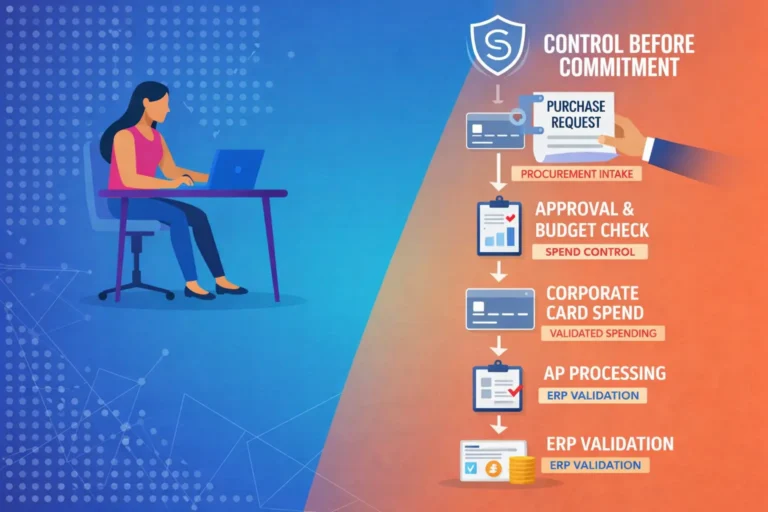
- Procurement. Requests, POs, service tickets, and budgets that sit upstream of the invoice in your procurement process.
- Direct Pay. Payments, approvals, and submissions, including the timing and terms behind each payment.
- Stampli Card. Credit lines, card limits, and transactions tied to Stampli Card spend.
Because all of this already lives in one environment, an analysis can combine sources that traditional reporting was never designed to bring together. The scope is your Stampli data, not your entire enterprise.
Why Reviewable Findings Matter
A finding you can review is different from an answer you have to take on faith. Finance teams should evaluate not only what data a system can read, but whether they can review what it produces before acting on it.
Reviewable analysis means you can:
- See what a finding is based on and check it against your own records
- Judge whether a pattern rests on hundreds of transactions or a handful
- Ask follow-up questions that narrow or expand the analysis
- Confirm a number before it reaches a leadership conversation
This is the practical test that should sit near the top of any AI finance evaluation. You should not have to trust output blindly. You should be able to look at what a finding rests on and decide whether it holds.
The Human Validation Layer
Even with relevant data and reviewable findings, AI-assisted analysis produces signal, not autonomous judgment. Stampli AI evaluates every invoice, line, and scenario; humans confirm, correct, and approve. In practice the workflow looks like this:
- Finance asks a specific question grounded in a real decision.
- The system analyzes the relevant data and surfaces findings.
- Finance reviews those findings and checks key numbers against existing reports.
- For high-impact findings, finance validates with stakeholders before acting.
- Finance owns the decision and the action.
The value is in surfacing patterns and quantifying impact quickly. The judgment about what to do with those patterns stays with the people accountable for it. AI handles the permutations; people handle the judgment.
What This Means for Your Evaluation
When you evaluate any AI tool for finance analysis, put the data and review questions near the top of your list:
- What data sources does the system actually read, and does it stay within data you already control?
- Can it work with detail like line items and document context, or only structured fields?
- Can you review a finding and see what it rests on before you act?
- Does it work with the data you already have, or does it require new data preparation?
- How does analysis quality improve as your data grows?
These questions cut through product claims faster than a feature list does. A tool that reads narrowly, or that cannot show its work, will struggle to earn a place in a finance team’s decisions, no matter how the analysis is described.
For finance leaders weighing this against other priorities, it connects directly to how CFOs can optimize operating cash flow: better context and reviewable findings turn AP data into decisions a controller can bring to the table with numbers attached.
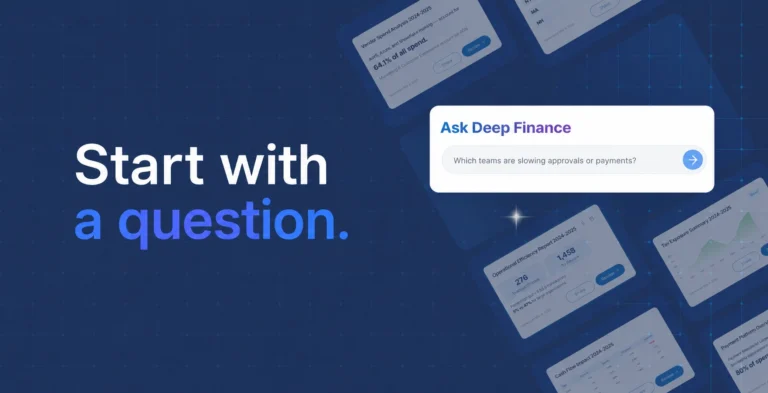
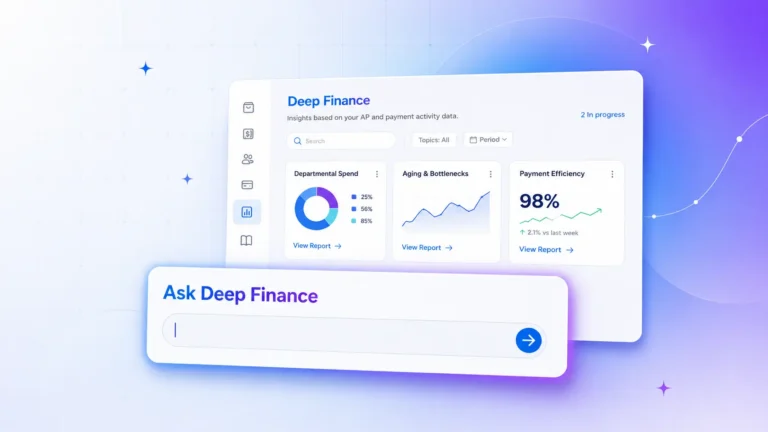
Stampli Deep Finance is built to analyze the finance data already moving through your Stampli environment: invoice contents, audit trail, vendor documents, procurement, Direct Pay, and Stampli Card records. The intelligence comes from combining these sources in ways traditional reporting was never designed to support, with a human review step kept in place.
See how Deep Finance reasons across the finance data you already have in Stampli.