


When finance teams first encounter AI-assisted analysis, the questions they ask reveal something encouraging: they are thinking carefully about how to use it well. Not whether it works, but how it fits into the way they already operate. How it earns trust. How it handles the nuance their work requires.
We recently hosted a webinar on Stampli Deep Finance with our customers, and it drew a strong turnout with a high level of engagement throughout. During the live Q&A, finance leaders came with sharp, practical questions about how AI analysis fits into the work they already do, how it earns their trust, and where it stops.
What Deep Finance Is and How It Differs
What is Stampli Deep Finance and how does it work?
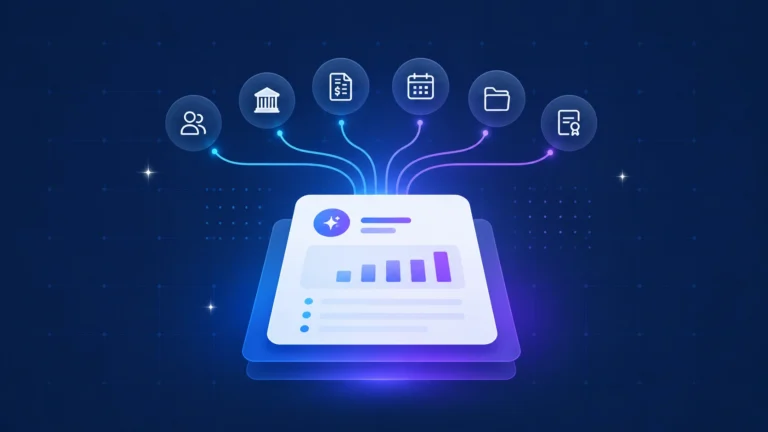
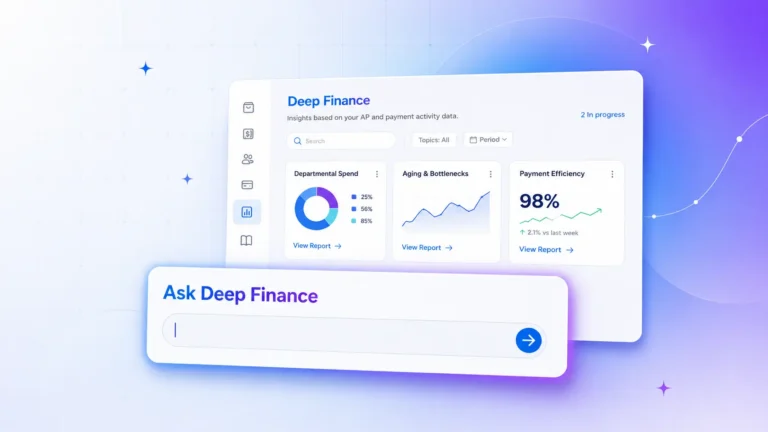
Deep Finance is an intelligence layer inside Stampli that builds a custom analysis for each finance question you ask. Rather than querying a pre-built data model, it assembles the equivalent of a full analysis workflow in a single automated run. It reads across your structured invoice data, approval histories, payment records, and vendor documents to surface patterns, quantify impact, and organize findings into an executive-ready analysis with supporting evidence and recommended actions.
How is AI financial analysis different from a dashboard, BI tool, or chatbot?
A dashboard answers questions someone designed it to answer. A BI tool requires someone to build the query logic first. A chatbot retrieves information from a fixed knowledge base. AI financial analysis does something architecturally different. Deep Finance starts from your question and constructs a bespoke analysis on the fly that reflects the shape of the data it finds. It also reasons over unstructured data, like invoice line items and contract language, which conventional finance views typically cannot analyze.
The difference matters because the most valuable finance questions are often the ones no one anticipated when the reporting system was built.
Good First Questions to Ask
What are good questions to ask AI about my AP and finance data?
The strongest questions are specific, financially material, and grounded in a decision you are preparing to make. Rather than “show me vendor spend,” try “which vendors had the largest price increases in the last six months relative to their original contracts?” Specificity gives the analysis a clear scope, and it produces sharper findings.
Strong starting topics include:
- Where are we being overcharged relative to contracted rates?
- Which vendors are billing amounts that do not match what we agreed to pay?
- Where might late payments be creating avoidable fees or vendor friction?
- Which invoices show unusual patterns compared with prior periods?
- What should we review before a major vendor renewal?
- Where are approval delays creating payment bottlenecks?
- Where might missing documentation be slowing the process?
These are questions finance teams already ask in spreadsheets and meetings. The shift is in how quickly and thoroughly you can get an evidence-backed answer.
Data Context and Coverage
What kind of AP and finance data can Deep Finance analyze?
Deep Finance can reason across the data already moving through your Stampli environment. At a high level, this includes invoices, vendors, approvals, payments, documents, and workflow history. The richest findings come from combining structured fields (totals, dates, GL codes) with unstructured content (line items, quantities, service descriptions, contract terms) that no one ever thought to code into a report.
How much data is needed for accurate financial analysis?
Generally, more helps. Analysis quality improves with data density. Organizations processing hundreds of invoices monthly across multiple vendors will see richer pattern detection than an organization with a handful of transactions. The system works with whatever is available, but more history and more document detail produce more useful signal.
Trust, Validation, and Human Control
How do I validate or fact-check AI financial analysis?
Treat Deep Finance output as strong directional signal, not to-the-cent precision. It is built to surface where money is moving in unexpected ways, where vendor relationships deserve scrutiny, and where patterns are emerging. The honest framing: this is signal intelligence that tells you where to look.
When a finding will drive a real financial decision:
- Review the key numbers against your existing reports
- Ask Deep Finance to surface the underlying invoices and payments behind the conclusion
- Validate critical findings with the relevant stakeholder before acting
The quality of the answer tracks the quality of the question. Specificity is rewarded, and critical thinking remains essential throughout the process.
Does Deep Finance replace the ERP, close process, or finance judgment?
No. Your ERP and close process handle precision: capturing transactions accurately, maintaining the system of record, and producing auditable financials. Deep Finance is a signal layer that finds what those systems were never designed to surface, like vendor concentration risk, contract-driven cost increases, and missed cash flow optimization opportunities. The two layers complement each other. Finance retains judgment. The tool changes what it costs to know where that judgment is needed.
Governance, Access, and Visibility
How do you handle data governance and access for AI in finance?
Governed AI means the organization controls who can use the tool, what data is accessible, and how outputs are handled. Deep Finance operates within your existing Stampli permissions and organizational boundaries.
What should teams look for in a governed AI finance-analysis workflow?
At the principle level, a governed workflow means:
- The finance team decides which questions to ask
- The analysis uses only data the organization has authorized
- Results are treated as signal to review, not autonomous decisions
- High-impact findings are validated before action
- The organization retains full ownership of decisions and next steps
This is the distinction between signal AI and autonomous AI. Deep Finance supports the first. The finance team owns the second.
How Deep Finance Relates to Existing AP Automation
If we already use Stampli for AP automation, what does Deep Finance add?
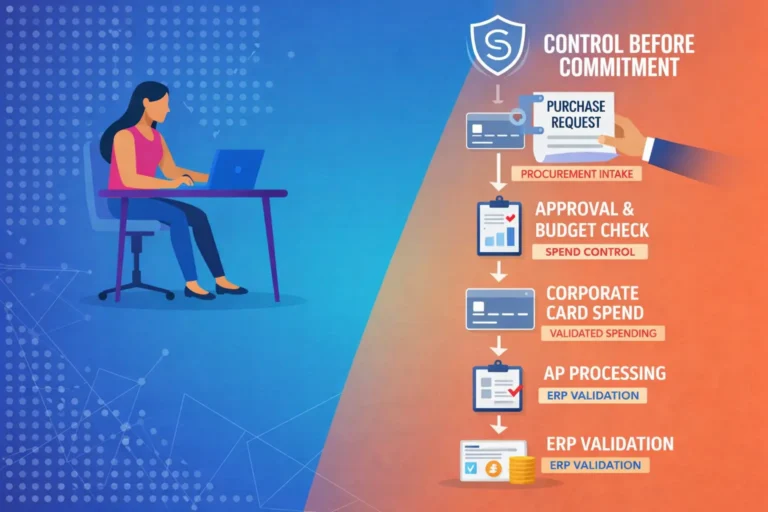
AP automation is fundamentally about capture: bringing invoices in accurately, routing approvals correctly, and paying on time. That process produces an enormous, detailed record of how your organization actually spends money. Most of that record goes unexamined because examining it was previously too expensive.
Deep Finance turns that record into intelligence. Everything your AP process captures, and the unstructured data it stored without ever coding, becomes material an analysis can reason over. The stronger your capture process, the richer the signals the intelligence layer can find.
Watch the complete Deep Finance webinar.