


A category can look well-diversified on the approved vendor list while one supplier quietly absorbs most of the actual spend. By the time the pattern shows up in a quarterly review, the contract is often close to renewal and the leverage has already moved.
That is not a sourcing failure. It is a visibility failure. Category spend reports show totals. Approved vendor lists show options. Procurement policies show guardrails. None of them show how spend actually distributes across the vendors in a category, quarter by quarter, as approvals accumulate and relationships consolidate.
For that, you need the invoice data. And once you read it correctly, vendor concentration splits into three distinct risks with three different owners: pricing leverage for sourcing, supply continuity for the risk committee, and renewal leverage for the contract owner. Most organizations manage one of these well, one of them occasionally, and one of them not at all.
Concentration Is Not Automatically Risk
Consolidating spend with two or three strategic suppliers is often a deliberate and healthy sourcing decision. It earns volume pricing, simplifies vendor management, and strengthens the relationships that matter most. Procurement teams build toward that outcome on purpose.
Concentration becomes risk when it happens without that decision behind it. When share shifts from several vendors to one or two because individual approvals accumulated toward incumbents, not because a category owner chose it. When qualified alternatives exist on the approved list but haven’t seen recent spend. When the vendor understands how deep the dependency has grown and finance does not.
That is the distribution gap worth watching, and it generates risk across three dimensions that do not always travel together.
- Pricing leverage sits with sourcing. When one vendor holds a dominant share of a category, the incumbent has no practical competition inside the account. Rate increases land without friction. Renewals skip the comparison step. This is a category management problem that typically escalates to the strategic sourcing or procurement team.
- Supply continuity sits with the risk committee. Single-source exposure is a different problem. When one vendor holds most of a category’s spend without a qualified second source in place, continuity risk becomes real. Operational dependency on that vendor can extend far beyond what any line item in the budget suggests. That conversation belongs on the CFO’s desk and, in many organizations, on the audit or risk committee’s agenda.
- Renewal leverage sits with the contract owner. At renewal, the relationship has often accumulated enough history that walking away is no longer a credible threat. If finance leadership understands the switching costs less clearly than the vendor does, the leverage has already moved. Contract owners need the share, trend, and alternatives framed before the first renewal conversation.
Each one starts in the invoice data. None of them surface automatically.
What Strategic Sourcing Doesn’t Catch
Formal sourcing reviews are the standard control for this. Procurement runs category strategies, qualifies alternatives, and reviews incumbents on a rotating cadence. In the categories procurement is actively working in a given quarter, concentration risk is generally well-managed.
The gap is everything else. Mid-market sourcing organizations rarely have capacity to touch every category every year. Concentration tends to build in three places strategic sourcing is not actively looking:
- Categories that haven’t been sourced in 18+ months. Spend keeps flowing. Share keeps consolidating. By the time the category comes back up in the sourcing calendar, the position has already hardened.
- Service spend that moves without a PO. Professional services, recurring engagements, and high-frequency vendor relationships often bypass the PO workflow entirely, the part of the procure-to-pay process where sourcing visibility is strongest.
- Tail spend growing into category-significant positions. A vendor that started small grows through ordinary approvals. No sourcing event ever flagged them because at the time, they weren’t material. Two years later, they are a category-significant position nobody has analyzed as strategic spend.
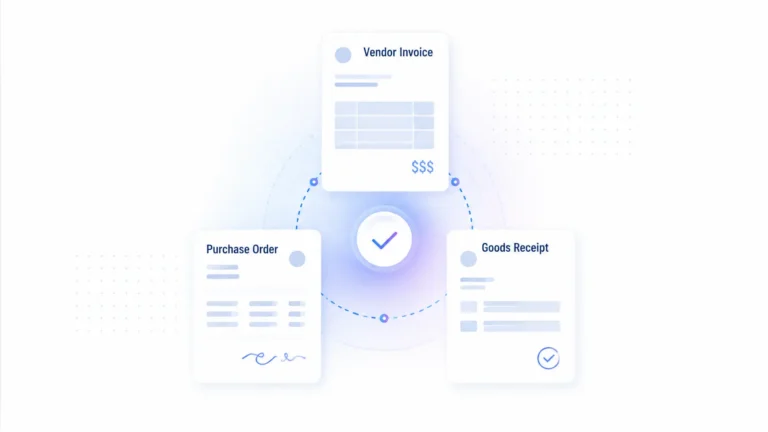
Three-way matching and sourcing reviews do the work they were designed to do. Concentration risk tends to compound in the spaces between those controls, and the invoice record is where it shows up first.
What the Invoice Record Already Captures
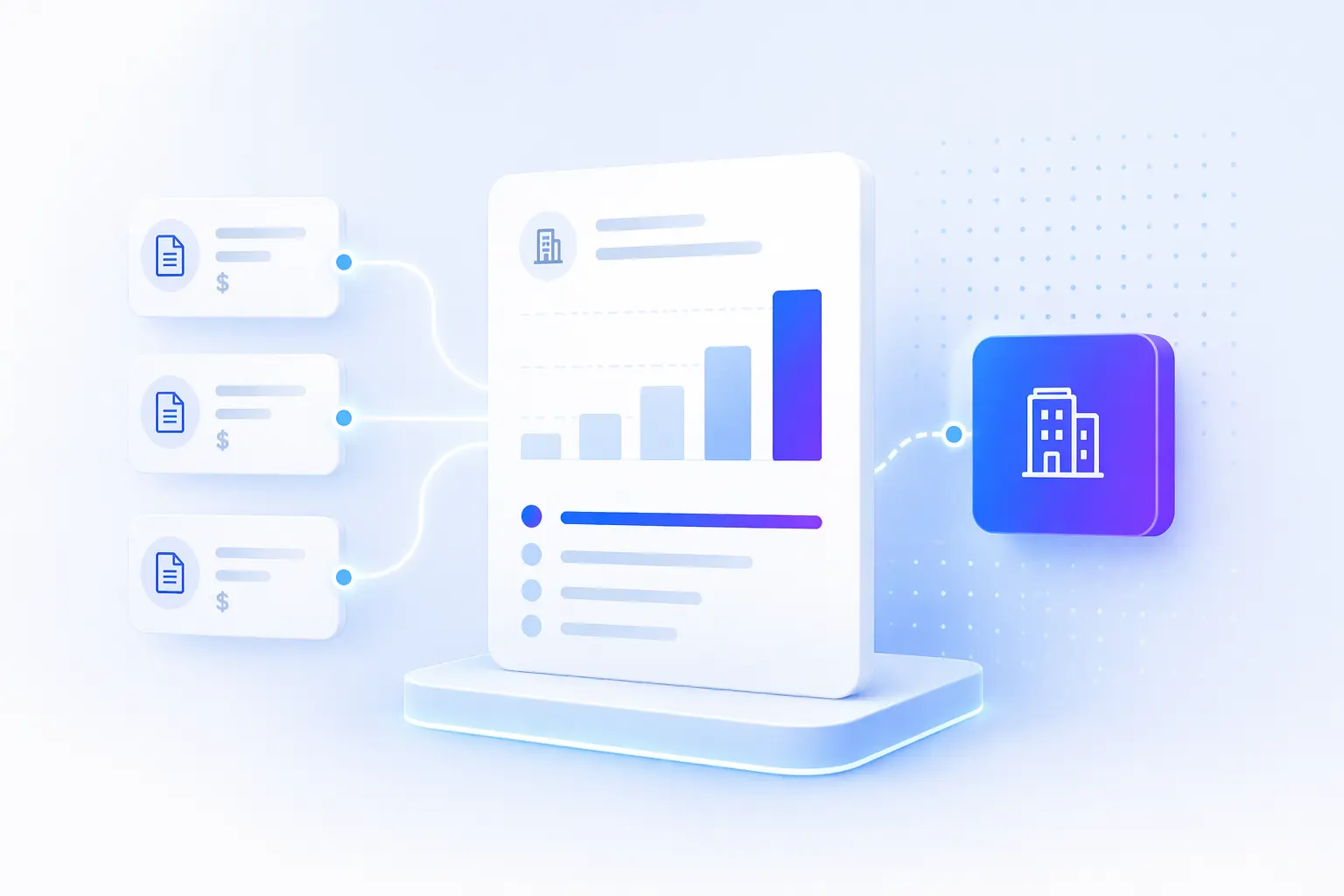
The invoice record captures every transaction in every vendor relationship, across every entity, every period, and every category. What it does not do automatically is organize that record into a risk picture.
The signals are already there:
| Signal | What it reveals |
| Vendor share of category spend | What percentage of total category spend flows to a single supplier |
| Spend trend over time | Whether concentration has been growing quarter over quarter |
| Entity-level distribution | Whether the dependency is isolated or consistent across the organization |
| Contract renewal proximity | Which concentrated relationships are approaching renewal without qualified alternatives active |
None of these require new data. They require the existing invoice data to be read across time and relationships rather than transaction by transaction.
The patterns worth investigating tend to fall into a few familiar shapes. A category that looks diversified at the consolidated level but concentrates heavily inside one or two entities. A vendor whose share of a category has been growing steadily over several quarters without a formal sourcing decision behind the shift. A subsidiary acquired in a prior transaction whose vendor base never rolled into the parent’s approved list, leaving concentration that predates anyone’s current sourcing view.
These are the patterns that rarely appear in a standard AP report. They live inside the invoice data until someone asks the right question.
Turning Invoice Data Into Concentration Intelligence
Stampli processes more than $150B in annual spend across its customer base. That invoice record is exactly the data layer a vendor concentration analysis needs: every transaction, every vendor, every category, every entity, connected over time.
Stampli Deep Finance™ surfaces that analysis from invoice data already inside Stampli. For a VP of Finance or CFO, that means seeing how spend actually distributes across vendors in the highest-exposure categories, which relationships carry concentration risk without qualified alternatives behind them, and which contract cycles are approaching without the leverage work done. It is also the kind of finding a Controller can bring into a leadership conversation with quantified impact already attached.
On vendor concentration specifically, a Deep Finance analysis can identify:
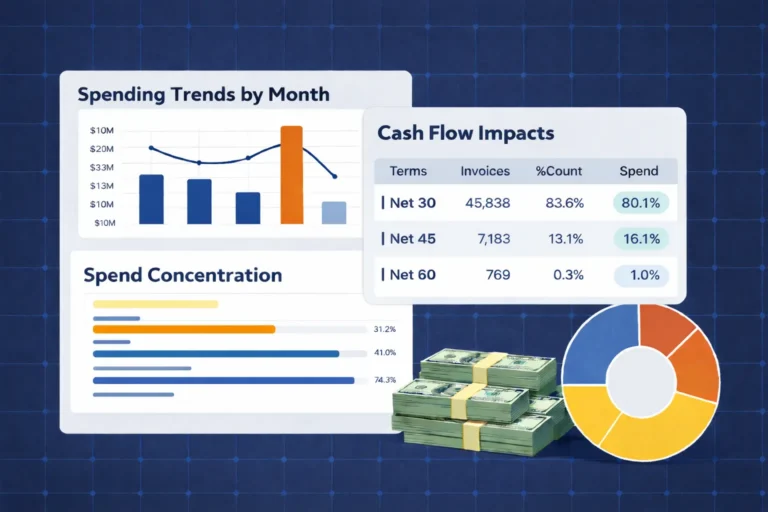
- Category concentration and sourcing exposure. The share of category spend flowing to the top one, two, or three vendors, where that share has crossed a risk threshold, and which of those positions grew through sourcing decisions versus approval drift. This is the signal that belongs with the strategic sourcing team.
- Single-source dependency and continuity risk. Vendors holding a disproportionate share of a category without a qualified second source active in the vendor base. This is the signal that belongs with the CFO and, where applicable, the risk committee.
- Entity-level concentration across a multi-entity organization. Where a category looks diversified at the consolidated level but concentrates heavily inside one or two entities, or where an acquired subsidiary carries a vendor base that never rolled into the parent’s approved list. This is the signal that standard AP reporting almost never surfaces, because it requires reading spend across entities and time together.
- Concentration trend. How vendor share within a category has shifted over the last several quarters, so finance can separate intentional consolidation from drift.
- Renewal exposure. Which concentrated relationships are approaching contract renewal, the financial weight behind each one, and whether qualified alternatives exist on the approved list but haven’t seen recent spend. This is the signal that belongs with the contract owner before the first renewal conversation.
The output is a focused analysis with quantified findings, supporting evidence, financial impact, and recommended actions. Not a dashboard to babysit, not a raw data export, but the kind of intelligence that reshapes how leadership understands supplier dependency before it becomes a negotiating problem or an operational one.
The Leverage Question
The practical test of concentration risk is not how it looks on a report. It is what happens the next time a concentrated vendor walks into a renewal conversation.
If finance leadership can describe the share, the trend, the entity-level exposure, and the qualified alternatives before that meeting starts, the leverage stays with the organization. If the vendor understands all of that better than finance does, the leverage has already moved.
Your organization’s invoice data is already telling a bigger financial story than most teams ever see. Vendor concentration is one of the most actionable parts of it.