



Stampli Intelligence
Billy did 89% of the work. You got the rest.
Meet the AI inside Stampli that does the busywork so your team doesn’t have to.
The AI skills for every step
of the Procure-to-Pay process
Start card spend
with intent
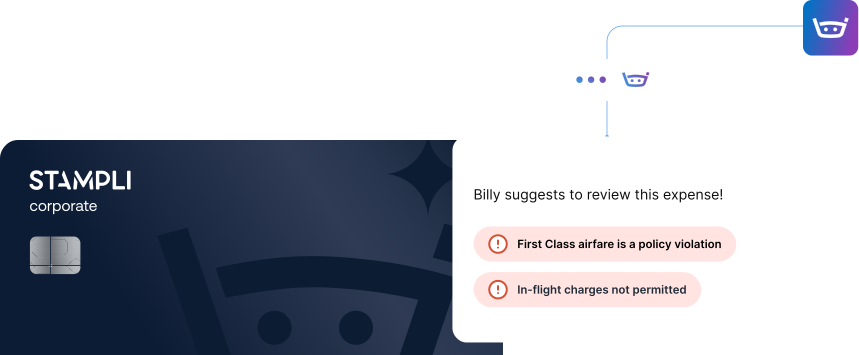
Requests, approvals, and cardholder, merchant, or vendor controls, all applied before the spend happens.
Code every field the way your team does.
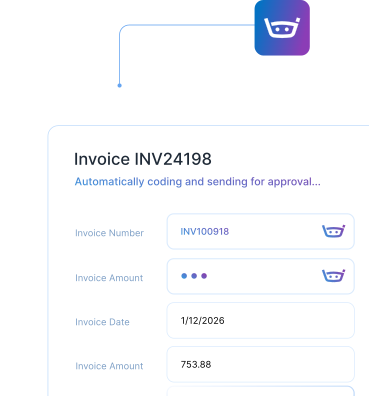
Billy learns your coding patterns and applies them across your ERP fields.
Bring receipts closer to the transaction
Billy checks invoices at the line level and surfaces variances before approval.
Route the work to the right person
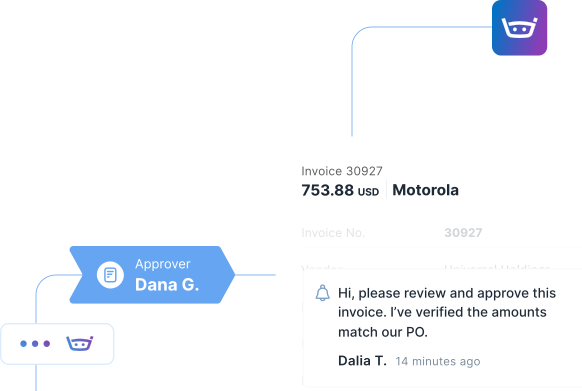
Billy follows your approval rules and calls attention to exceptions that need judgment.
Check vendor details before money moves.
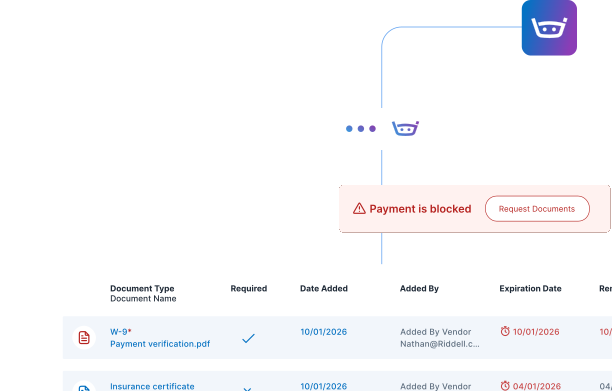
Billy compares payment information with vendor records and history, then flags changes for review.
Billy keeps the work moving.
Stampli Intelligence connects the process.
How Billy gets the work done
Starts with context
Billy reads each transaction with the requests, documents, decisions, and history around it.
Applies your rules
Billy applies your ERP structure, coding patterns, policies, and approval logic to the work in front of him.
Does the work
Billy prepares repeatable work, explains what he did, and routes exceptions to the right people.
You decide
Your team reviews the work, resolves exceptions, and retains control of approvals, posting, and payment release.
“With Billy now performing such time-consuming manual tasks as coding invoices to the correct general ledger accounts, the AP team has seen their responsibilities shift to projects that add much greater value to the business.”

Amanda Brown
Controller at Wenspok Companies
From manual mode to review flow
Before
Manual work at every step
- Finance enters transactions, searches for vendor context, and reconstructs how similar work was coded.
- Teams compare invoices, purchase orders, and receipts manually, then search for the reason behind a variance.
- People determine who owns the work, chases approvals, and explains exceptions across inboxes and conversations.
- Routine preparation and financial judgment compete for the same attention.
After
With Billy
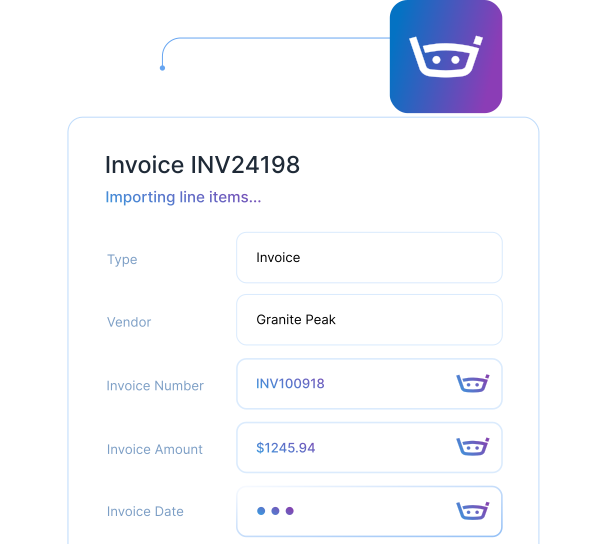
- Billy prepares supported fields using the transaction, ERP structure, and reviewed patterns connected in Stampli.
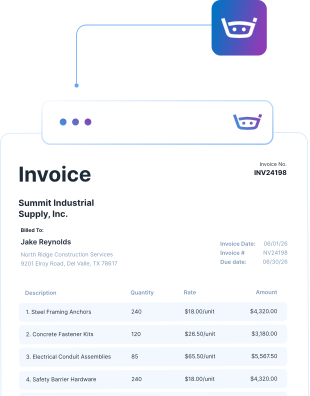
- Billy compares the relevant documents and surfaces mismatches with the supporting context attached.
- Billy applies configured routing and brings exceptions to the people responsible for reviewing them.
- Billy prepares the routine work while authorized people confirm, correct, and approve it before posting to the ERP.
FAQ FAQ
Billy is the AI inside Stampli. He uses the transaction context, controls, rules, and history already connected across Stampli to prepare routine finance work, explain what he did, and route exceptions to the right people. Finance teams retain judgment and control.
Billy can prepare routine purchase-request work, check vendor information, capture and code invoices, match invoices to purchase orders and receipts, route work using configured approval rules, surface payment exceptions, and prepare expense details. The exact skills available depend on the Stampli products and workflows a customer uses.
Billy uses connected ERP structure, coding patterns, policies, approval logic, transaction history, and reviewed corrections to prepare work. Reviewed changes help him improve future suggestions, while people can inspect and change his work before it moves forward.
No. Billy prepares repeatable work, applies configured rules, explains what he did, and routes exceptions for review. Authorized people retain control of approvals, exception resolution, ERP posting, and payment release.
Billy uses ERP-connected data such as general ledger accounts, entities, departments, projects, vendors, purchase orders, and approval structures when preparing work. Stampli validates configured information before approved records are posted or synchronized to the ERP, and the ERP remains the financial system of record.
No. Billy is embedded workflow AI inside Stampli. He works with connected transaction context and customer-configured controls to prepare specific procure-to-pay work, explain actions, and route exceptions inside the finance workflow.
Billy compares transaction and payment information with connected records, history, and configured rules. When something does not match, such as new bank details, addresses, or email domains, he surfaces the change with relevant context and holds it for authorized review. Billy supports the organization’s verification and approval controls; he does not replace them.


