




How Ambrosia QSR Doubled Its Restaurant Footprint Without Doubling Its Finance Team
Ambrosia QSR replaced paper-based invoice processing with a scalable AP workflow—cutting processing from days to hours, accelerating month-end close, and supporting 200+ restaurants without proportional headcount growth.

If we were growing the way we are today without Stampli, we would have needed significantly more AP staff. Instead, the automation has allowed the same team to support far more restaurants.
 Reuben Rentas Chief Financial Officer at Ambrosia QSR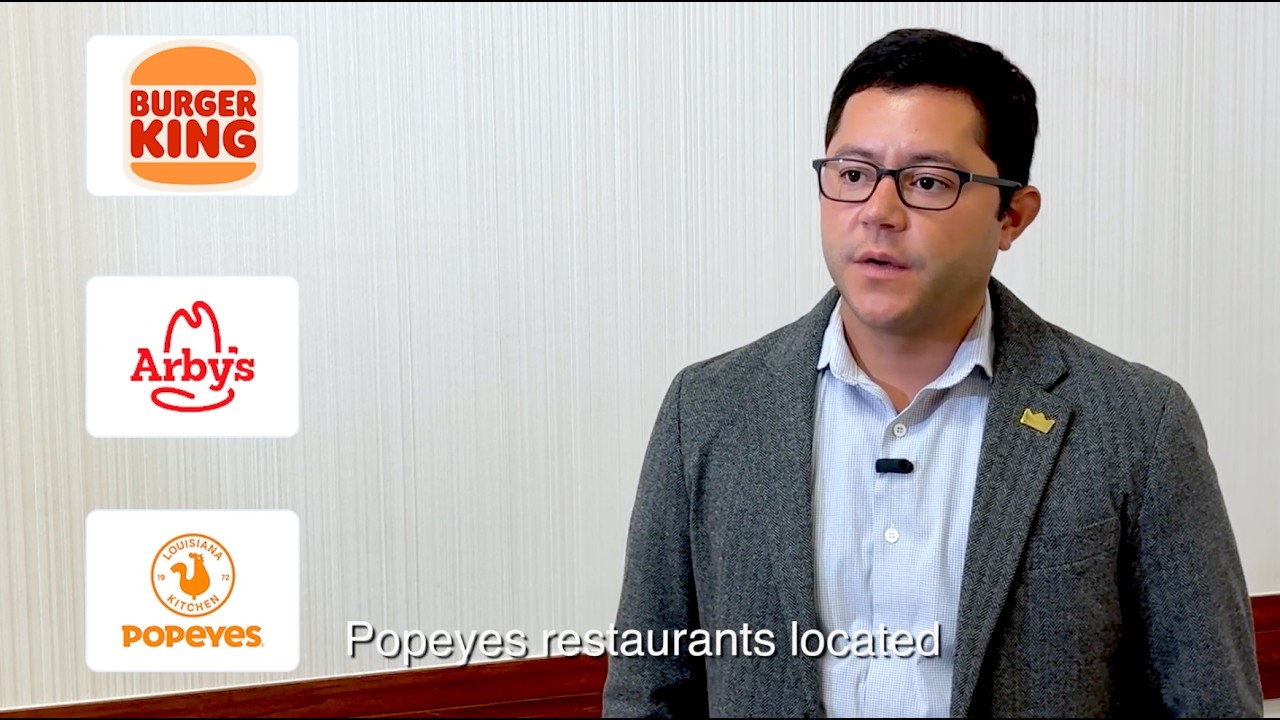
About Ambrosia QSR
Ambrosia QSR is one of the largest quick-service restaurant franchise operators in the Pacific Northwest, operating over 200 Burger King, Popeyes, and Arby’s restaurants across Oregon, Washington, California, and Idaho.
Supporting that footprint is a finance organization responsible for multiple operating companies, real estate entities, and corporate operations. As Ambrosia QSR continued expanding through acquisitions and new restaurant openings, the accounting team needed processes that could keep pace with the growing complexity of the business.
Today, CFO Reuben Rentas and Accounts Payable Manager Jess White oversee an AP operation that processes invoices across nine entities while supporting hundreds of restaurant managers, district managers, and corporate stakeholders.
Challenge
A Finance Operation That Couldn't Scale with the Business
When Ambrosia QSR was formed in 2019, the company was embarking on an ambitious growth strategy. Through acquisitions and new restaurant development, leadership planned to rapidly expand its footprint across the Pacific Northwest.
That growth quickly exposed the limitations of the company’s finance processes. Accounts Payable relied almost entirely on paper. Thousands of vendor invoices arrived by email, were printed, physically routed for approval, scanned back into the system — all tracked via email. Every manual handoff created another opportunity for delays, misplaced invoices, or approval bottlenecks. Finance had limited visibility into where invoices were in the approval process, making urgent payments difficult to manage and month-end close increasingly stressful.
At the same time, the company’s corporate card program operated in a completely different system. Card transactions lived in a separate application, requiring finance to manually retrieve statement activity, code transactions one by one, and reconcile everything separately from invoices before importing the information back into Microsoft Dynamics GP. As restaurant locations and spending increased, that disconnected process became another significant source of manual work.
"Everything was paper based. We were printing invoices, sending them around for approvals, scanning them back in, and trying to remember who had what. It just wasn't sustainable."
 Reuben Rentas CFO at Ambrosia QSR
 Reuben and Jess knew those processes wouldn’t support the scale of the business they were building. Every acquisition added more restaurants, vendors, invoices, approvers, and card activity, while the AP team relied on increasingly manual processes to keep pace. They wanted to build a finance operation that could absorb growth without sacrificing visibility, control, or speed.
Solution
A Platform That Grew Alongside the Business
After evaluating several AP automation platforms, Ambrosia QSR chose Stampli because it offered the most intuitive user experience, a low-risk implementation, and the flexibility to grow alongside the business.
When the company first implemented Stampli, the immediate priority was replacing a paper-based AP process with a centralized digital workflow. Invoices that once moved between printers, desks, scanners, and email now entered Stampli electronically. There, AP coordinators could code invoices, route approvals, and track every step of the approval process from a single workspace.
At the time, Ambrosia QSR was running Microsoft Dynamics GP. Although invoice data initially required an export from Stampli and a manual import into GP, the new process was already dramatically faster than the paper workflows it replaced.
Shortly after, Stampli expanded its Dynamics GP capabilities and Ambrosia QSR adopted the GP Bridge integration, eliminating manual imports altogether. Invoice information flowed directly into the ERP while AP teams continued working inside Stampli, removing another manual step as the business continued acquiring restaurants.
The company later expanded beyond invoice automation by adopting Stampli Card, replacing a legacy corporate card program. With Stampli Card, card purchases became part of the same AP workflow as invoices, giving finance one place to manage approvals, coding, and supporting documentation. Across the entire platform, Stampli AI works behind the scenes and automatically codes over 80% of Ambrosia QSR’s 3,700+ monthly invoices — with over 20 fields per invoice.
Ambrosia QSR then made the decision to migrate from Dynamics GP to Sage Intacct. While the ERP migration required significant work across banking, vendors, and other financial systems, the AP transition itself was remarkably straightforward. Working alongside Stampli’s implementation team, the company connected its new Intacct environment while maintaining its existing invoice workflows, allowing the AP team to continue operating with minimal disruption.
"We had to reintegrate our bank, our vendors, and our fixed asset module. All of that was a big headache. But turning on Stampli wasn't even a thing. It was so easy."
Reuben Rentas CFO at Ambrosia QSR The simplicity extends beyond the accounting department. New district managers — most of whom have restaurant operations experience rather than accounting experience — can begin approving invoices with virtually no software training.
"We don't have to spend additional time teaching people how to use Stampli. We just have to teach them what they should be looking for."
 Jess White AP Manager at Ambrosia QSR
 Having their data in one platform also simplified one of finance’s most time-consuming responsibilities: audits. Instead of manually gathering invoices, approval records, and supporting documentation, Reuben and Jess can now provide their auditors with direct access to Stampli, where every invoice, approval, comment, and coding decision is tied to a single transaction.
What began as a solution for eliminating paper has grown into a finance platform that has scaled alongside years of acquisitions, operational complexity, and an ERP migration — all without requiring the AP team to rebuild its core processes.
Results
A Finance Team That Scales With the Business
Since implementing Stampli, Ambrosia QSR has doubled its restaurant footprint while dramatically increasing finance productivity.
3x AP Coordinators productivity
Each AP coordinator now supports 50–80 restaurants, up from 20–30, enabling growth from 100 to 200+ locations without proportional hiring
7 days -> 1-2 days invoice turnaround time
Cut invoice turnaround from seven days to one or two, while urgent invoices can be approved within hours
Reduced AP close by 2 days
Easing month-end pressure and giving accounting more time to close
Auditors now self-serve
Reducing manual document requests and freeing the AP team to stay focused on day-to-day operations.
"Month-end close used to mean staying late, chasing approvals, sending emails, and making phone calls. Today, close day — and even the day before — feels much more manageable."
Reuben Rentas CFO at Ambrosia QSR Looking Ahead
Building on the Foundation
As Ambrosia QSR continues evaluating additional acquisitions, finance is confident its AP infrastructure can support future growth without immediately expanding headcount.
The team is also exploring additional capabilities such as Deep Finance and expanded payment functionality while continuing to consolidate finance operations into a single connected workflow.
For Reuben and Jess, the biggest outcome isn’t simply processing invoices faster — it’s building an AP operation that can continue scaling alongside one of the fastest-growing restaurant franchise organizations in the Pacific Northwest.
“This has really changed the visibility, transparency, and functionality of AP. We couldn't do anywhere near what we do today, with the thousands of invoices we process, without this tool.”
 Luke Pisors CEO at Ambrosia QSR
 FAQ
How can multi-unit restaurant operators absorb growth without proportional hiring?
By replacing manual invoice routing with a centralized AP workflow that increases throughput per finance employee. Using Stampli as its AP automation platform, Ambrosia QSR moved each AP coordinator from supporting 20 to 30 restaurants to 50 to 80. That 3x productivity gain let the 200+ location Burger King, Popeyes, and Arby's franchise operator double its footprint from 100 to 200+ restaurants without proportional AP hiring.
How long does invoice approval take with AP automation?
Invoice turnaround typically drops from a week to a day or two once approvals move out of email and paper. Using Stampli's procure-to-pay platform for accounts payable, Ambrosia QSR cut its average invoice turnaround from seven days to one or two days, with urgent invoices approved within hours. Stampli also helped the company reduce its AP close by two days, easing month-end pressure across nine business entities.
Can one platform manage both vendor invoices and corporate card spend?
Yes. Ambrosia QSR replaced a legacy corporate card program with Stampli Card, bringing card purchases into the same approval and coding workflow as the 3,700+ invoices it processes in Stampli each month. Before consolidating on Stampli, card transactions lived in a separate application that required manual statement retrieval, one-by-one coding, and separate reconciliation before importing into Microsoft Dynamics GP.
Does migrating to a new ERP require rebuilding AP workflows?
Not when the AP platform mirrors the ERP rather than duplicating it. Ambrosia QSR migrated from Microsoft Dynamics GP to Sage Intacct while keeping its existing Stampli workflows intact, connecting the new environment with help from Stampli's implementation team. CFO Reuben Rentas described reintegrating the bank, vendors, and fixed asset module as the hard part, while turning on Stampli "wasn't even a thing."
How does AP automation make audits easier for multi-entity restaurant groups?
Stampli ties every invoice, approval, comment, and coding decision to a single transaction record, so the audit trail is built as work happens rather than reconstructed later. Ambrosia QSR now gives its auditors direct access to Stampli instead of manually gathering invoices, approval records, and supporting documentation across nine entities. That removed a recurring source of manual work for the AP team.
Read more

Case Study
How Ambrosia QSR Doubled Its Restaurant Footprint Without Doubling Its Finance Team

Case Study
Purple Strengthens Controls and Speeds Invoice Processing Time with Stampli

Case Study
Family Allergy & Asthma Achieves 90% Faster Invoice Processing

Case Study
A surprising role for AP: Blunting the impact of business cycles for Avid Acceptance
Case Study
Spanish Fork City Transforms Invoice Processing

Case Study
Renova Energy Reduces Invoice Processing Time by 50%
Case Study
Nationwide Security Service Pays Subcontractors 2X Faster with Stampli
Case Study
Kiva Doubles AP Productivity with Greater Invoice Visibility

Case Study