


When a supplier sends a new quote, last year’s invoice gives you a starting point. It shows what you paid before. It can’t tell you how that price compares with prices for a similar item elsewhere.
That missing context matters when costs are shifting. In its October 2026 Beige Book, the Federal Reserve reported that contacts in several districts expected further price increases as contracts expired, amid uncertainty around energy and tariffs. Finance and purchasing teams cannot settle those forces, but they can ask better questions about the prices in front of them.
We’re introducing Stampli Benchmarks to help. For supported items with qualifying data, it puts aggregated, anonymized pricing benchmarks alongside your recorded prices in Stampli. You can see where a price falls, decide what deserves a closer look, and bring more specific questions to a quote or renewal conversation.
See the price difference at the item level
Total spend with a vendor can hide changes in what you bought, how much you ordered, and the unit you paid for. A useful comparison starts with the item and its unit of measure.
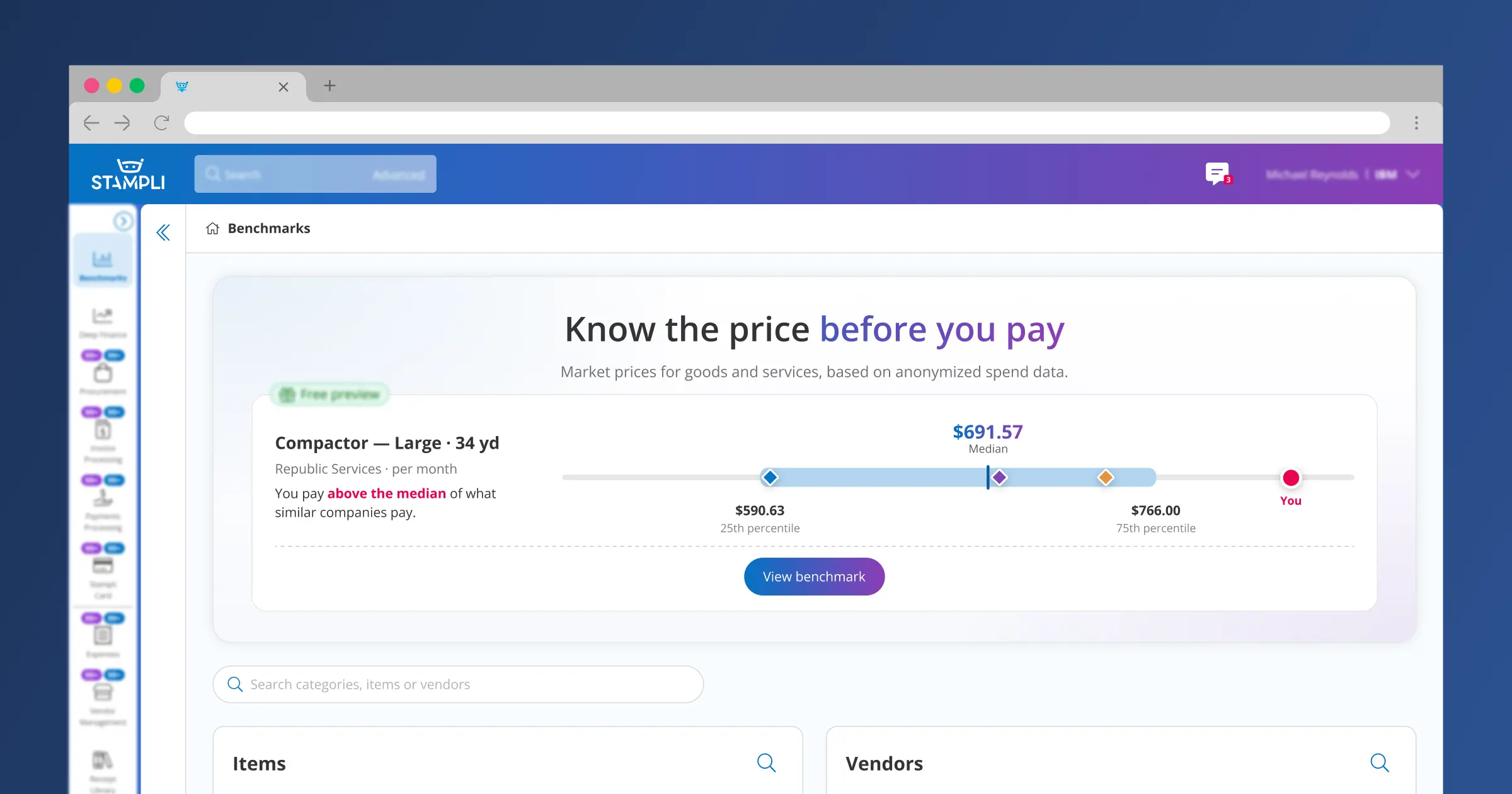
Stampli Benchmarks, powered by Stampli Intelligence, enables teams to search or browse available benchmarks by item, vendor, or category. Each qualifying item benchmark shows the 25th-percentile, median, and 75th-percentile prices, plus the unit of measure and coverage information. The range between the 25th and 75th percentiles represents the middle half of observed prices in that benchmark.
For a matched purchase, your recorded price appears alongside the range. You can open your own invoice details to check the description and unit against the proposed match. Where available, filters and vendor or SKU details can help you examine the comparison further.
That check matters. Similar descriptions can refer to different sizes, specifications, or package quantities. A price gap is worth investigating only after you have checked that the items and units really compare.
Bring better questions to the vendor conversation
A benchmark is most useful when it helps you decide what to investigate before you commit to a purchase or accept a renewal price. An increase may need scrutiny, but an unchanged price can also merit a look.
Suppose a new quote sits above an available range for a matching item. First check what the offer includes. Delivery, order volume, lead time, and service terms may help explain the difference. Then ask the supplier a specific question: “Does this price include delivery, and would a larger order change the unit cost?”
Finance can identify the item and price that prompted the review. The person responsible for the purchase can weigh the supplier’s terms and reliability, then decide whether to request a breakdown, seek another quote, negotiate, or proceed. That is how pricing intelligence can strengthen purchasing power: it gives the team a clearer reason to ask, while the team makes the decision.
Stampli’s Procure-to-Pay platform connects requests, invoices, expenses, and payments. Benchmarks adds pricing context to the work finance and purchasing teams already do together.
Know what the comparison covers
Stampli Benchmarks presents aggregated, anonymized results. Availability depends on the item and qualifying data.
The displayed range is a reference for review, not a definitive market price or a verdict on a vendor. It may not reflect every commercial term or market condition. Consider the item match, unit, timing, volume, geography, and contract terms before acting. A price difference does not establish overpayment or guarantee savings or a negotiation outcome.
Start with a purchase already on your team’s agenda: a quote to evaluate, an upcoming renewal, or an item you buy regularly. An available benchmark can help you decide what to ask before the next commitment.