Ramp vs Expensify vs Stampli: The 2025 P2P platform comparison that matters

The landscape in 2025 reveals three distinct approaches to financial operations automation:
- Ramp has expanded from a corporate card platform into a multi-product solution that includes corporate cards, travel management, procurement, and some accounts payable (AP) automation features.
- Expensify remains anchored in its expense-first architecture, adding corporate cards and basic bill processing while struggling to support comprehensive procurement-to-payment (P2P) workflows.
- Stampli delivers purpose-built P2P specialization with a decade of procurement-to-payment expertise without the compromises that come with platforms built for other purposes.
So, should you opt for a simple solution that works now, but may not work tomorrow?
Or should you choose a comprehensive platform that will set you up for long-term success?
Ramp: The card-first approach with AP add-ons
Ramp has evolved from a corporate card startup into a financial management platform promising comprehensive spend management. While their expansion beyond cards demonstrates ambition, it reveals the classic challenge of doing many things versus excelling at a few.
Ramp’s “all-in-one” approach attempts to compete across corporate cards, expense management, travel booking, procurement, and accounts payable. But for companies needing deep P2P automation expertise, breadth often comes at the expense of depth.
Unlike platforms spreading resources across multiple financial products, Stampli delivers specialized P2P capabilities. This includes comprehensive P2P workflows built by AP experts, for finance teams who need sophisticated automation without sacrificing implementation speed or ongoing support quality.
Ramp key features
- Corporate cards with variable cashback up to 1.5%
- Spend controls
- Partial accounts payable features
- Expense management platform
- Travel booking integration
- Integrations with many ERPs and third-party platforms
Ramp’s strengths
Multi-product spend management platform
For companies seeking to consolidate corporate cards, expense tracking, and basic invoice processing, Ramp provides these functions within a single platform.
While Ramp’s multi-product approach offers more breadth than basic expense tools, companies needing sophisticated P2P workflows often discover that building several products means less depth in specific areas they need most.
Customers say complex business requirements can be a challenge. “Ramp is streamlined and easy to use,” says one reviewer. “[But] less flexible for complex approval chains, multi-entity setups, or unique accounting rules. Custom routing or nuanced workflows may require workarounds.”
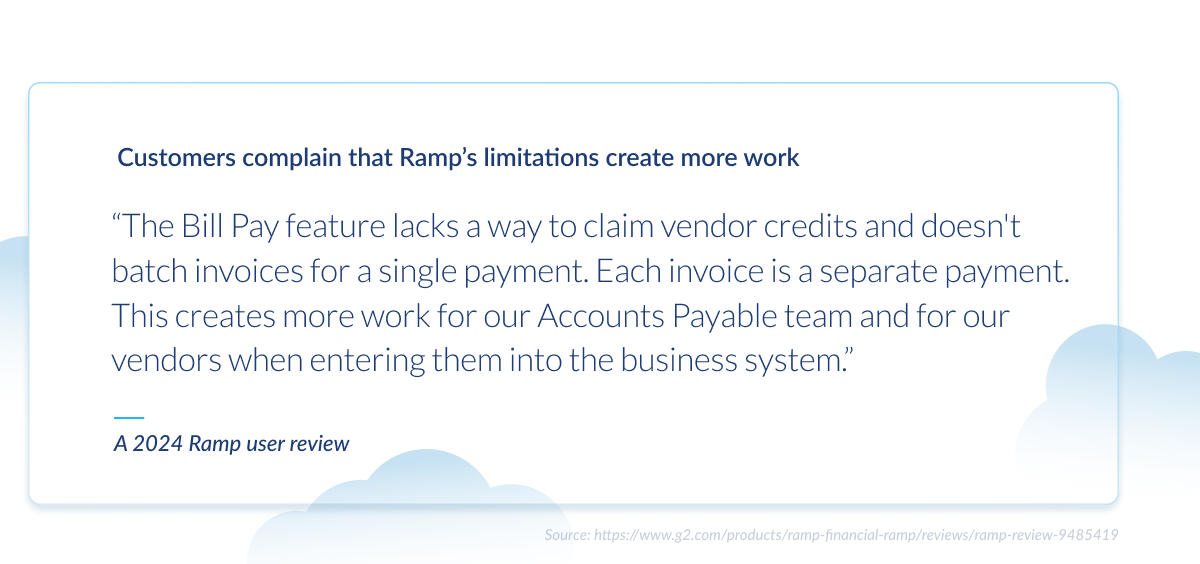
“The Bill Pay feature lacks a way to claim vendor credits and doesn’t batch invoices for a single payment,” explains another Ramp customer. “Each invoice is a separate payment. This creates more work for our Accounts Payable team and for our vendors when entering them into the business system.”
Unlike spend management solutions adapted for AP workflows like Ramp, Stampli’s purpose-built P2P architecture handles complex scenarios that emerge as companies scale beyond basic expense processing.
Ramp’s weaknesses
AP built around card-centric workflows
Ramp’s evolution from corporate card provider to multi-product platform reveals itself most clearly in their accounts payable functionality.
They’ve added invoice processing capabilities, but the architecture remains optimized for card-based transactions rather than comprehensive supplier invoice workflows.
Tools like Ramp that extend card functionality into AP workflows often have challenges adapting to more complex financial workflows. And expense-first platforms like Expensify sometimes struggle with comprehensive invoice processing and management.
Ramp offers some tools for building customized approval workflows. But customer reviews highlight limitations for complex scenarios.
For example, customers say there are approval hierarchy limitations. Ramp doesn’t support “the ability to have a review hierarchy,” writes one reviewer.
In contrast, Stampli’s workflow engine was designed specifically for procurement-to-payment complexity. It supports conditional routing based on GL codes, vendor relationships, purchase categories, and budget hierarchies.
“What I appreciate most about Stampli is its AP-first approach,” says one customer, “which streamlines the entire accounts payable process by integrating communications, documentation, and workflows into a single platform.”
ERP integration gaps
Ramp customer feedback reveals integration challenges that matter for complex financial operations.
As one user explains, “In bill pay, a payment made outside of Ramp doesn’t integrate to the ERP accounting system our clients use and that creates double work.”
Another customer notes specific P2P workflow gaps, “The Treasury syncing to Sage Intacct hasn’t always been smooth…I end up booking those manually.”
Customers say Ramp’s functionality gaps become an issue for invoice-heavy operations. One verified user explains, “It is not fully integrated into our SAP system, requiring additional work on our end to transfer work order numbers and service order tracking.”
Ramp maintains many third-party integrations. But they may not hit the mark in the same way as Stampli’s support for over 70 ERPs and immediate, real-time data sync with platforms like NetSuite, Sage Intacct, and Microsoft Dynamics.
Product and feature fragmentation
While Ramp has rapidly expanded from corporate cards to a full financial operations platform, customers say integration challenges emerge when multiple financial products are built separately and connected later.
Despite sophisticated individual features, customers note challenges when these modules must work together seamlessly:
- Different interfaces and data entry patterns across card, AP, procurement, and travel modules
- Reporting challenges spanning multiple product areas
- Workflow hand-offs between product lines requiring manual coordination
- Multi-entity configurations that must be managed separately across each product area
“Ramp is clearly trying to innovate and remain ahead of the curve,” says one customer. “The most recent update to the website has overcomplicated the end user experience.”
Other Ramp customers say that the fragmented systems create user management challenges, such as, “the inability to have multi-functioning roles within the Ramp system.”
Multi-product platforms like Ramp sometimes struggle with integration of separate systems and features.
Stampli, on the other hand, was created as a unified P2P platform from inception. Purchase requests, invoice processing, approvals, and payments flow through the same data model, user interface, and workflow engine — not multiple products that need to talk to each other.
Ramp pricing
Ramp operates on a fundamentally different economic model than traditional P2P automation platforms, generating revenue primarily through card interchange fees rather than software subscriptions.
This creates both opportunities and constraints for organizations evaluating total cost of ownership.
Current pricing structure:
- Free plan: $0/monthly with unlimited corporate cards, basic AP automation, and standard accounting integrations
- Plus plan: $15/monthly per user plus team-based platform fees, including advanced AI features and premium ERP integrations
- Enterprise: Custom pricing with annual billing requirements for advanced customization needs
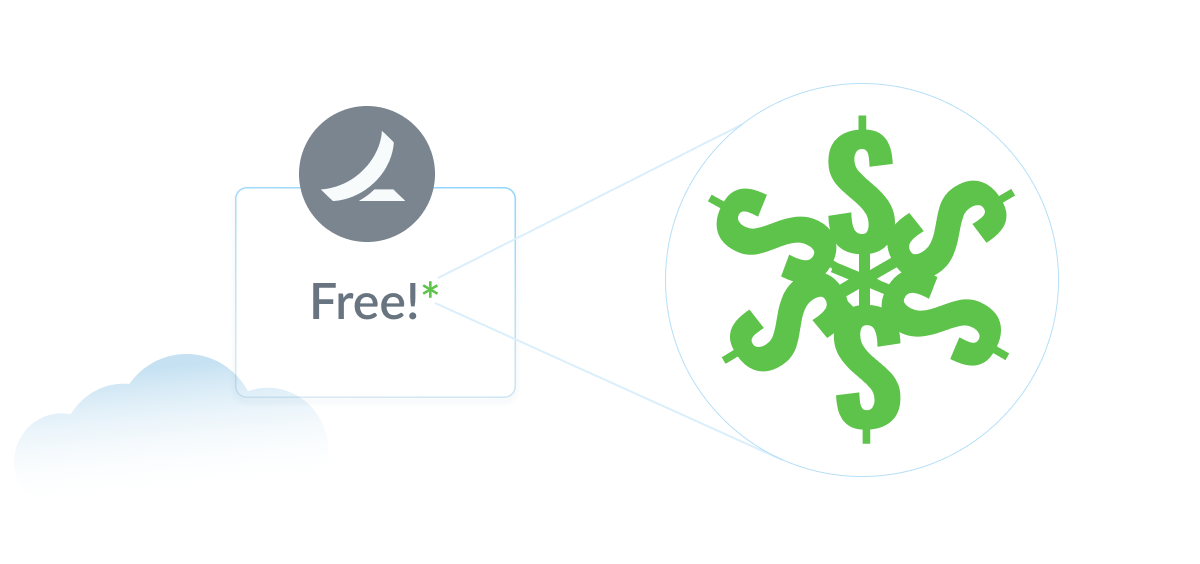
Ramp receives a portion of the interchange fees that merchants pay when accepting card payments (typically 1.5-3% of transaction value). This means their “free” software gets subsidized by your card spending volume, creating an incentive structure that favors card-based transactions over alternative payment methods.
Cost considerations for P2P operations:
- Free tier works well for card-focused spending but may create operational constraints for comprehensive supplier payments.
- Plus plan costs can escalate with team growth, unlike Stampli’s unlimited user model.
- Enterprise requirements for high-volume invoice processing or complex multi-entity setups require custom contracts.
Ramp’s pricing is different from a solution like Stampli, which offers transparent and all-inclusive cost structure. The interchange model means Ramp has a financial incentive for customers to use cards over other payment methods, which could introduce a conflict of interest or potential friction for some finance teams.
Expensify: Legacy expense reporting trying to be a financial super-app
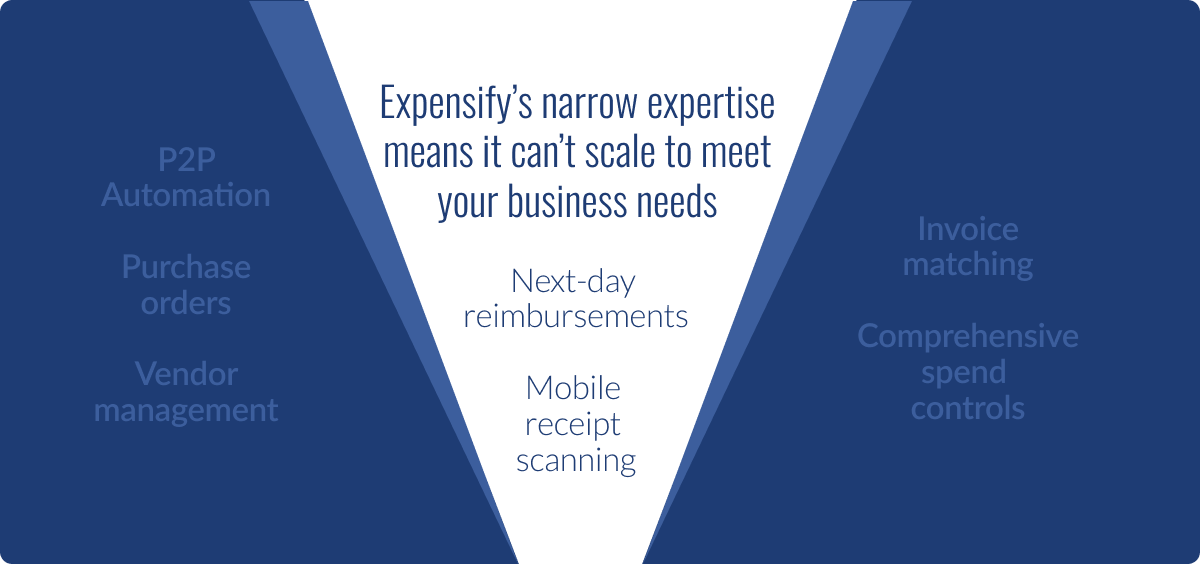
Expensify built its reputation as the mobile-first solution that made expense reports less painful with SmartScan receipt capture and next-day reimbursements. But as companies mature beyond basic employee expense tracking, they discover Expensify’s fundamental limitation: It’s an expense reporting tool trying to stretch into comprehensive spend management.
While Expensify has added corporate cards and basic bill pay features, it remains anchored in its expense-first architecture. Companies needing real purchase-to-pay automation and support for purchase orders, vendor management, invoice matching, or comprehensive spend controls will quickly hit Expensify’s ceiling.
Expensify’s key features
- SmartScan OCR for receipt capture and automated data extraction
- Expensify Card with real-time expense categorization and policy enforcement
- Next-day ACH reimbursements for some out-of-pocket employee expenses
- Basic bill processing with simple email uploads and approval workflows
- Chat-based Concierge support and mobile-first user experience
- Integrations with QuickBooks, Xero, NetSuite, and Sage Intacct for expense syncing
Expensify’s strengths
Mobile expense capture
The platform has simple interfaces, quick reimbursements, and minimal training requirements that make it attractive for teams of around 100 people processing basic travel and entertainment expenses.
Most customers seem to say this functionality works well. But some customers mention bugs or issues with the basic mobile capture functionality. One review says, “the receipt scanning tool can malfunction and misread a receipt.”
Either way, there’s a fundamental difference between optimizing for individual expense submission and managing organizational spend control.
While Expensify handles the employee side efficiently, it cannot capture, control, or optimize the supplier invoices and purchase orders that typically represent a large portion of business spend as companies scale.
In contrast, Stampli takes a comprehensive approach. Rather than bolting basic bill pay onto expense reporting, Stampli unifies procurement, supplier invoices, employee expenses, and payments in one purpose-built P2P platform.
Whether it’s a purchase order, supplier invoice, or employee expense, everything flows through intelligent workflows with complete audit trails and real-time ERP sync.
Quick setup for basic expense workflows
Organizations with straightforward expense policies can deploy Expensify quickly. The platform requires minimal configuration for standard travel and meal reporting, making it accessible for small businesses without dedicated finance teams.
But this simplicity becomes a constraint as businesses develop more sophisticated needs. Multi-level approvals, complex coding rules, purchase requisitions, and vendor management requirements that Expensify simply cannot support.
Many customers report that they ultimately outgrew the simple functionality of Expensify. “While I am a big cheerleader for the price and usefulness it had for my company in its early stages,” writes one customer who switched away from Expensify, “there was a definite point in which we outgrew Expensify and its limited flexibility to grow.”
Expensify’s weaknesses
Zero purchase-to-pay infrastructure
Expensify’s most fundamental limitation is architectural: it was designed for employee expense reimbursement, not comprehensive spend management.
Expensify cannot handle purchase orders, budget enforcement, or systematic vendor management.
Invoice processing is limited to basic uploads with simple routing.
Expensify is a simple application that has clear limitations. Customers agree. One reviewer puts it plainly, saying, “Expensify isn’t a scalable solution.”
Stampli is a complete P2P software solution that connects every dot across finance. Customers consistently say they enjoy the integrated platform and how it streamlines their entire financial operation.
“[The Stampli] workflow is fantastic for AP as well procurement purchase requests and admin controls are great,” writes one customer.
SmartScan accuracy issues plague productivity
Despite being Expensify’s signature feature, SmartScan OCR generates consistent customer complaints. Some negative feedback in customer reviews centers on receipt scanning problems requiring manual corrections.
Expensify customers often report that the OCR functionality incorrectly captures information or doesn’t fully capture the receipt being scanned.
“The camera function cuts off receipts at the bottom far too much. it is hard to take a good pic in the app,” writes one reviewer.
While Expensify’s OCR struggles with basic receipt scanning, Stampli’s Billy™, Your AI Employee, has nine plus years of training data P2P patterns, achieving 97-100% accuracy in purchase order matching and intelligent GL coding suggestions powered by Cognitive AI.
This makes it a massive time saver and efficiency boost for businesses — not a frustration.
“Let the AI do the basic tasks, so the team can utilize their human ingenuity,” explains Matt Andersen, CFO of Superior Masonry Unlimited. “Stampli has given my team and I the ability to focus on the bigger strategic mission.”
Billing complexity, hidden costs, and misleading pricing
Expensify’s pricing appears straightforward until implementation reveals various fees and restrictions that frustrated customers consistently report.
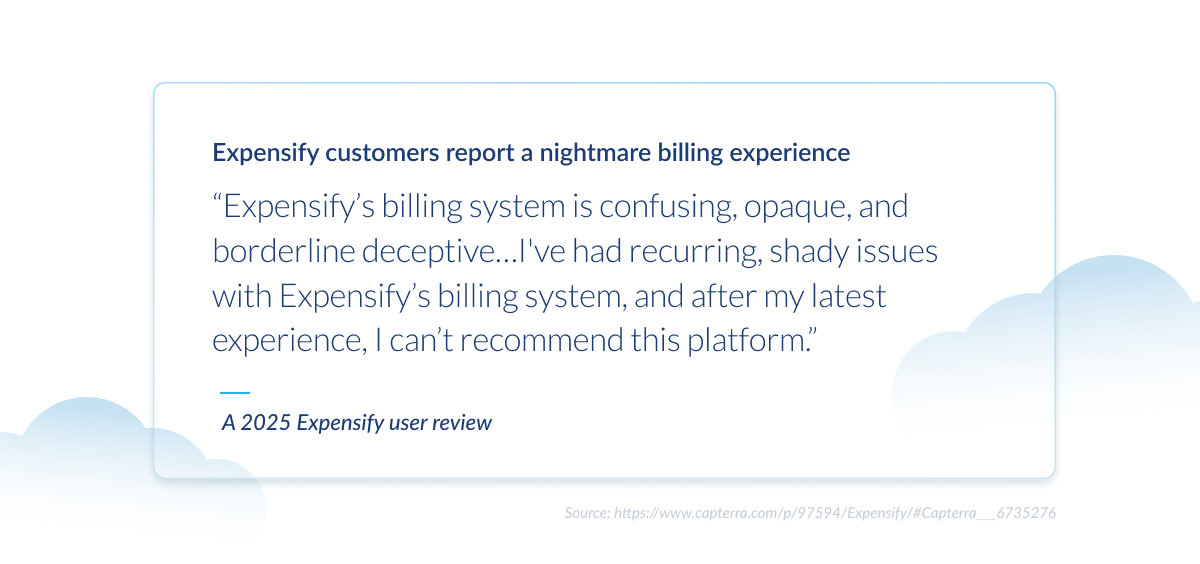
“Expensify’s billing system is confusing, opaque, and borderline deceptive,” says one review. “I’ve had recurring, shady issues with Expensify’s billing system, and after my latest experience, I can’t recommend this platform.”
Customers mention:
- Misleading base pricing: Advertised $5-$9 per user rates require annual commitments, jumping to $7-$14 monthly for month-to-month flexibility.
- SmartScan restrictions: “Unlimited” scanning only works with Expensify Card adoption. Without cards, users get 25 free scans monthly, then pay $0.20 each.
- Multi-policy double billing: Same employee counted multiple times if active across multiple policies, common in multi-entity organizations.
One review even called Expensify a “double billing nightmare,” saying, “they have been double billing me as an individual, and then again for a ‘group workspace,’ even though I sent numerous messages through the chat concierge.”
On the flip side, Stampli uses a straightforward and simple subscription model. You can expect monthly or annual plans with no hidden transaction fees, unlimited users and vendors, and comprehensive training and onboarding included.
Support limitations become business-critical
Expensify’s chat-only concierge support model works for simple expense questions but breaks down when businesses face complex integration, approval workflow, or financial reconciliation issues.
Customer feedback reveals structural support problems that can become a major concern.
One Expensify customer explains their negative experience and wrote, “[The] convenience [of Expensify] is completely overshadowed by their terrible billing practices and lack of customer support.”
“Customer support doesn’t resolve issues,” writes another Expensify customer.
This contrasts with Stampli, which is consistently rated #1 on G2 for User Satisfaction. And customers regularly report, “customer support in this process has been outstanding,” as one customer writes.
Expensify’s pricing
Collect plan: $5/user monthly
- Basic expense reporting with unlimited SmartScan included
Control plan: Variable pricing based on commitment:
- $9/user monthly (annual subscription + 50% Expensify Card usage)
- $18/user monthly (annual subscription without card usage)
- $36/user monthly (pay-per-use, no commitment)
Cost escalation factors:
- Companies not meeting 50% Expensify Card usage requirements pay double
- Pay-per-use pricing reaches $36/user monthly
- Multi-workspace configurations can increase complexity
- Enterprise limitations cap at 1,000 employees maximum
While advertised at $5-$9 per user, many companies end up paying the full $36/user monthly rate.
Stampli: Purpose-built P2P expertise without the trade-offs
While multi-product platforms like Ramp spread resources across corporate cards, travel, and AP automation, and expense-first tools like Expensify struggle to expand beyond employee reimbursements, Stampli delivers deep procurement-to-payment specialization that adapts to how finance teams actually work.
Rather than building multiple financial products or retrofitting expense tools for invoice processing, Stampli’s decade of P2P specialization means purpose-built workflows, ERP integrations, and AI capabilities designed specifically for procurement-to-payment complexity from day one.
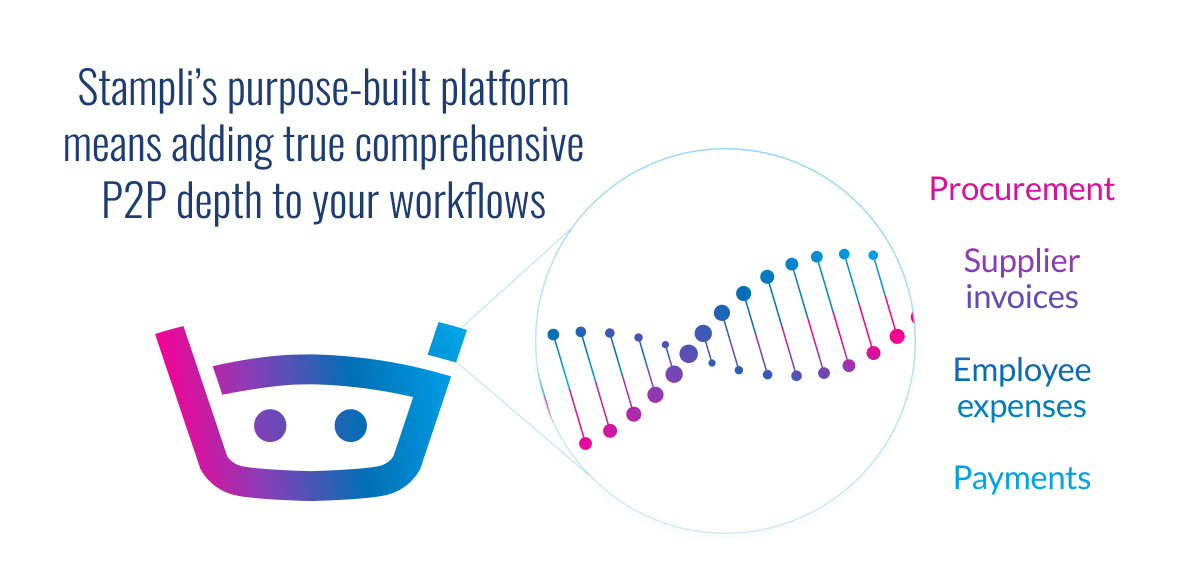
Stampli’s P2P-specialized features
- True end-to-end P2P automation: Complete procurement-to-payment integration connecting purchase requests, approvals, invoice processing, and supplier payments in one unified workflow.
- Billy, your AI employee: Your AI co-pilot with nine plus years of P2P-specific learning, achieving 97-100% accuracy in PO matching and intelligent GL coding suggestions
- Deep ERP integration: 70+ ERP integrations with real-time two-way synchronization, not daily batch updates or view-only connections.
- Adaptive workflow engine: Dynamic approval workflows that configure to your existing processes rather than forcing standardization across departments.
- Stampli Direct Pay: Consolidating ACH, check, wire transfer, and virtual card payments within the AP workflow.
- Integrated budget management: Real-time budget controls integrated directly into procurement and approval workflows, not separate spend tracking.
Stampli’s strengths
Eliminates procurement-AP fragmentation
Unlike multi-product platforms where cards, expenses, and invoice processing operate in separate modules, Stampli customers benefit from unified workflows where the same record travels from purchase request through final payment reconciliation.
There’s no data re-entry, no workflow handoffs, no separate logins for different payment types.
Customers say Stampli unlocks their team’s efficiency.
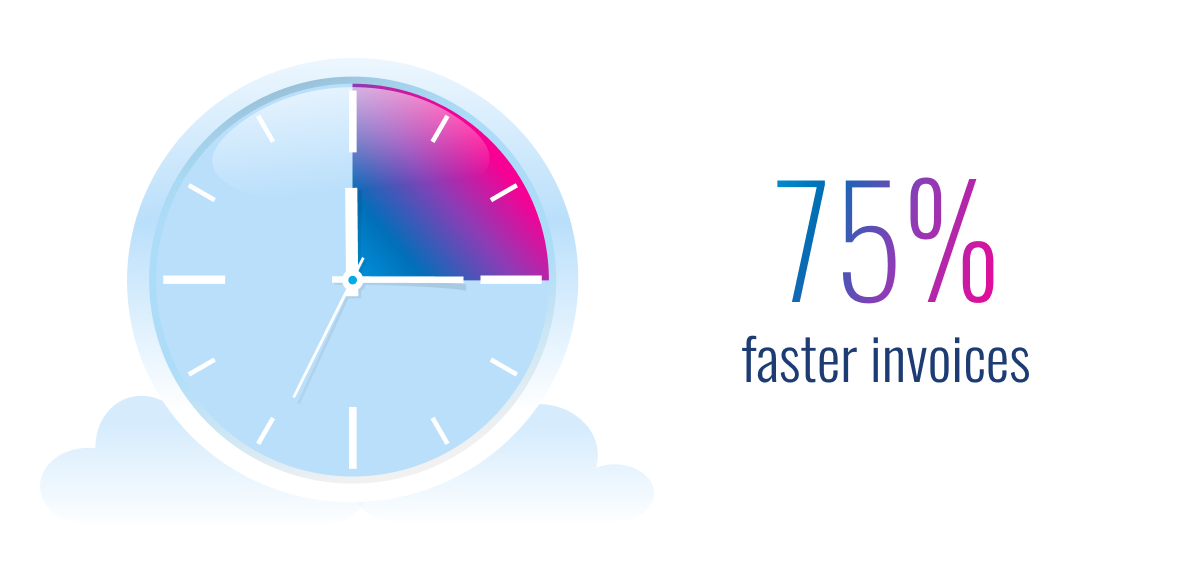
“Stampli has helped us become much more efficient,” explains one Controller. “We process invoices 75% faster and close our books 73% faster each month.”
Purpose-built AI that understands procurement complexity
While competitors offer general automation or adapt AI from other financial use cases, Billy leverages a decade of P2P-specific training. Intelligent purchase request structuring, duplicate invoice flagging, and approval routing suggestions that improve with your organization’s patterns.
“We have cut down a lot of time it takes to code invoices,” one review explains. “The AI system is very accurate, and the Stampli team is very devoted on getting better every quarter.”
Implementation designed for finance team realities
“The implementation was a very easy process and customer support walked us through each step necessary to go live,” explains one customer.
Stampli consistently ranks highest in G2 for:
- Implementation Index (Ease of Setup, User Adoption, Time to Go Live)
- Relationship Index (Quality of Support, Ease of Doing Business)
- Results Index (ROI and Meeting Requirements)
Stampli’s transparent pricing
Stampli offers straightforward monthly pricing based on your invoice volume and feature requirements.
Pricing advantages:
- Unlimited users across all plans — no penalties for adding employees, approvers, or vendors
- Transparent monthly subscription without hidden transaction fees or per-seat charges
- No payment processing markups on standard ACH, check, and wire transfer costs
- Fast ROI with implementations completed in weeks, not quarters
What’s included at every level:
- Complete P2P automation from procurement through payment
- Billy, AI with continuous learning capabilities
- Real-time ERP integration with 70+ supported systems
- Dynamic approval workflows and budget controls
- Dedicated customer success support from P2P experts
The right P2P solution for your business
Choose Ramp if you’re primarily focused on corporate card spend management and can work within a multi-product platform where breadth across financial functions matters more than P2P specialization depth.
Choose Expensify if your business is small (under 100 employees) with straightforward employee expense needs and basic bill processing requirements that won’t exceed expense-first architectural limitations.
Choose Stampli when you need comprehensive P2P automation that scales without forcing you to choose between sophistication and simplicity. You want the depth that expense-first tools can’t provide and the specialization that multi-product platforms sacrifice for breadth.
Stampli delivers specialized P2P excellence for:
- Growing organizations with 200-5,000 employees who have outgrown basic expense tools
- Finance teams processing 100+ monthly invoices requiring sophisticated approval workflows
- Companies needing real procurement controls, not just spend tracking
- Businesses requiring deep ERP integration with real-time synchronization
- Teams wanting fast implementation without sacrificing comprehensive functionality
One customer summarizes the difference:
“It’s clear that Stampli was designed and improved by AP professionals. Every time you think ‘it would be really nice if…’ Stampli probably addresses that. We’ve eliminated a tough-to-fill and high-turnover AP position in our department, and still have more time within our group.”
The bottom line: Why accept the trade-offs of multi-product complexity or expense-first limitations when you can have purpose-built P2P expertise that adapts to how finance teams actually work?
