Virtual card payments reduce dependence on paper checks and give vendors a faster way to receive funds.
Preserve payment control
Invoice approval and payment authorization remain distinct, supporting oversight and segregation of duties before funds move.
Make the payment method earn its place
Eligible AP Card payments can generate rebates without separating the payment from its invoice, vendor, or ERP record.
From approved invoice to reconciled card payment
Before Stampli
Card payments live in a portal AP has to visit.
With Stampli AP Cards
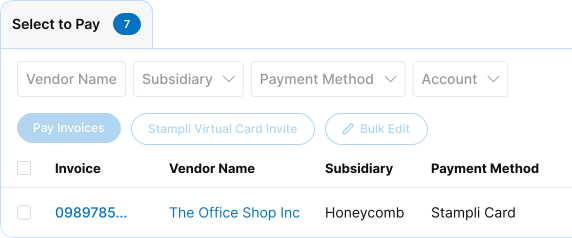
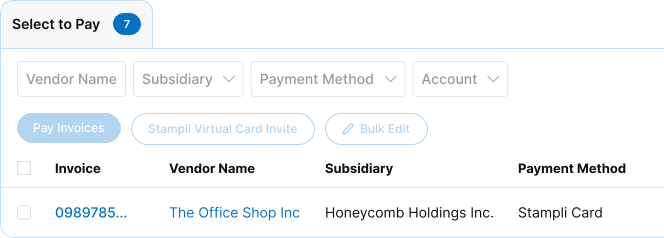
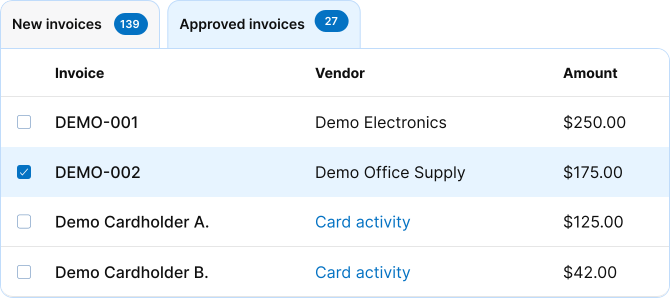
The card payment stays on the invoice that approved it.
AP enters approved invoice information into a separate bank or card portal.
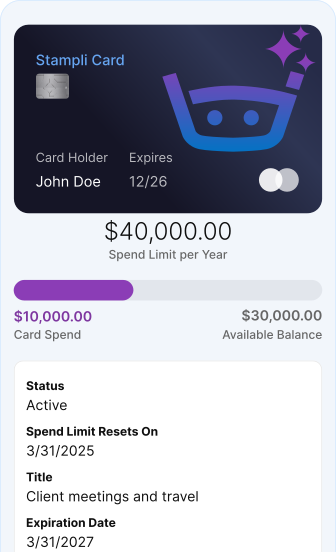
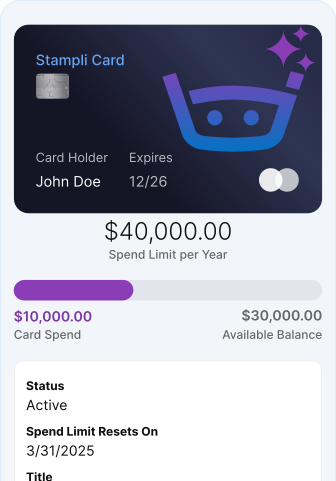
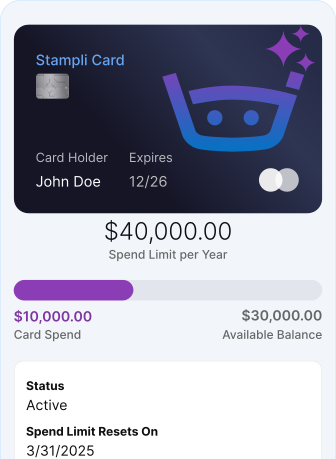
The approved payment becomes the basis for a controlled virtual card.
Checks move slowly, status is hard to confirm, and the occasional envelope develops a travel itinerary of its own.
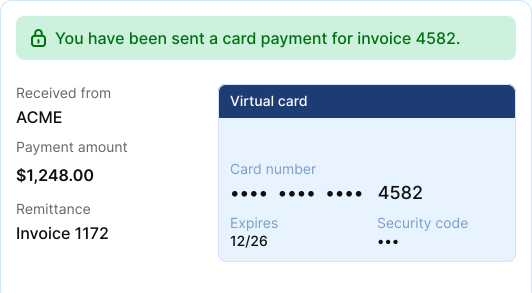
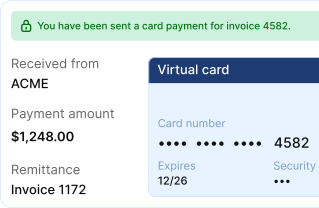
Eligible vendors receive a secure virtual-card payment with connected remittance information.
The card charge appears in a generic transaction feed, disconnected from the original invoice.
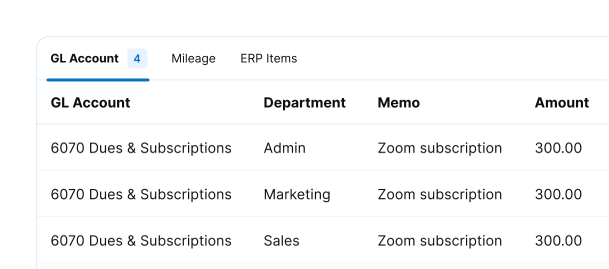
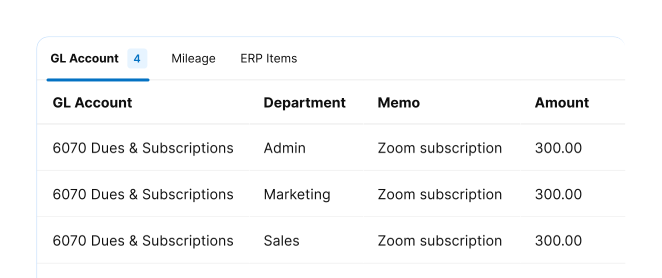
The transaction stays in Accounts Payable with its coding, documents, and approvals.
Vendors call AP to ask whether the check went out.
Vendors see the payment and its remittance details themselves.
Card rebates require a separate program with its own reconciliation.
Eligible AP Card payments earn rebates without leaving the invoice record.
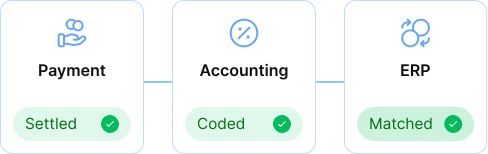
The invoice, card charge, payment status, and ERP record get matched after the fact.
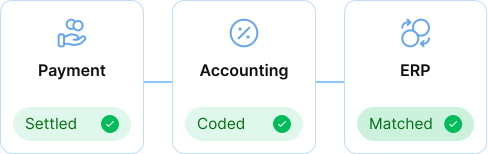
Every step stays connected from approved invoice through ERP reconciliation.
Every card transaction, connected to the
process behind it
FAQs
FAQs
An AP virtual card is a digital card used to pay a specific vendor or approved obligation. It gives Accounts Payable a faster alternative to checks while keeping payment and reconciliation controlled.
AP Cards pay vendors and are processed in Accounts Payable. Expense Cards are issued to employees for purchases and are processed in Expense Management.
Eligibility depends on whether the vendor accepts card payments. Eligible vendors receive the virtual-card and remittance details with the payment and process it like any other card transaction.
Eligible vendors receive the virtual-card and remittance information needed to process the payment, and the resulting activity stays connected to its invoice and payment record in Stampli.
Eligible Stampli AP Card payments can generate rebates. Availability and terms depend on the card program and payment eligibility.
Yes. The invoice, payment, accounting, card transaction, and reconciliation record stay aligned with the ERP, which remains the system of record.