


Optimize NetSuite expense management software to control spend

Your company’s expense management process may be costing you time and money.
Many businesses rely on paper receipts, spreadsheet templates, and multiple phone calls and emails to track, capture, and verify employee expenses. These manual processes are slow and make it harder to see missing receipts, delayed approvals, coding questions, and expenses that are not ready for the books.
Your company may already use NetSuite to manage financial and business processes. NetSuite should remain the system of record for general ledger accounts, dimensions, subsidiaries, employee records, and posting logic.
Stampli Expense Management extends that foundation with a finance-ready workflow for company-card expenses and employee-paid reimbursements. It keeps receipts, policy context, approval history, coding suggestions, AP Review, payroll readiness, ERP sync, exceptions, and audit history connected as the expense moves forward.
Read on to explore NetSuite expense management, the common workflow challenges, and the control points to evaluate when you connect employee spend with your ERP.
What is NetSuite expense management software?
NetSuite expense management software is a core feature of the NetSuite ERP. It automates employee expense reporting, approvals, and reimbursements. It also lets businesses create and enforce expense policies, set custom approval workflows, and track spending.
Expense management challenges
Accounts payable departments need an efficient process to track expenses, gather receipts, assign expenditures to general ledger accounts, and post expense data to the ERP. The finance team must also pay credit card bills and reimburse employees for out-of-pocket expenses. For a business still using manual expense management processes, these tasks can present some significant challenges:
Reliance on email and spreadsheet expense reports
Vendors may not send receipts and expense reports to a single email address, which means emails can get lost. Scanned receipts may not always be legible, or the wrong receipts and expense reports may be attached to the email.
Lost receipts delay expense tracking and coding
Employees usually complete expense reports when they return from travel. Sometimes, however, they lose their receipts before they complete and submit the expense report, which can result in delays in coding expenses.
Slow approval processes
In manual processes, accounts payable emails expense reports to approvers for review. The approver may miss the email or not receive the right attachments and information. Because the expense report is in an email, AP can’t monitor the approval status until the approver replies to the email.
Monthly credit card statements delay expense verification
Most corporate credit card providers send statements once a month. That means AP teams must wait for the statements to arrive before checking employees’ receipts and expense reports with the statement entries. As a result, the AP teams are busy with work during month-end close and may not have time to review expenses for fraud.
Automate expense management workflows
NetSuite expense management aims to address these challenges by automating and optimizing basic expense reporting and management processes. Companies needing greater visibility and control over expenses should consider a third-party financial automation platform solution.
As we’ll see, integrated automation platforms augment NetSuite’s significant strengths by meeting these challenges and providing benefits beyond NetSuite’s core expense solution. Choosing the right automation platform and integrating it with NetSuite lets your business realize significant savings and gain control over expense budgets.
Let’s take a closer look at each step of the expense management process.
Steps of the expense management workflow
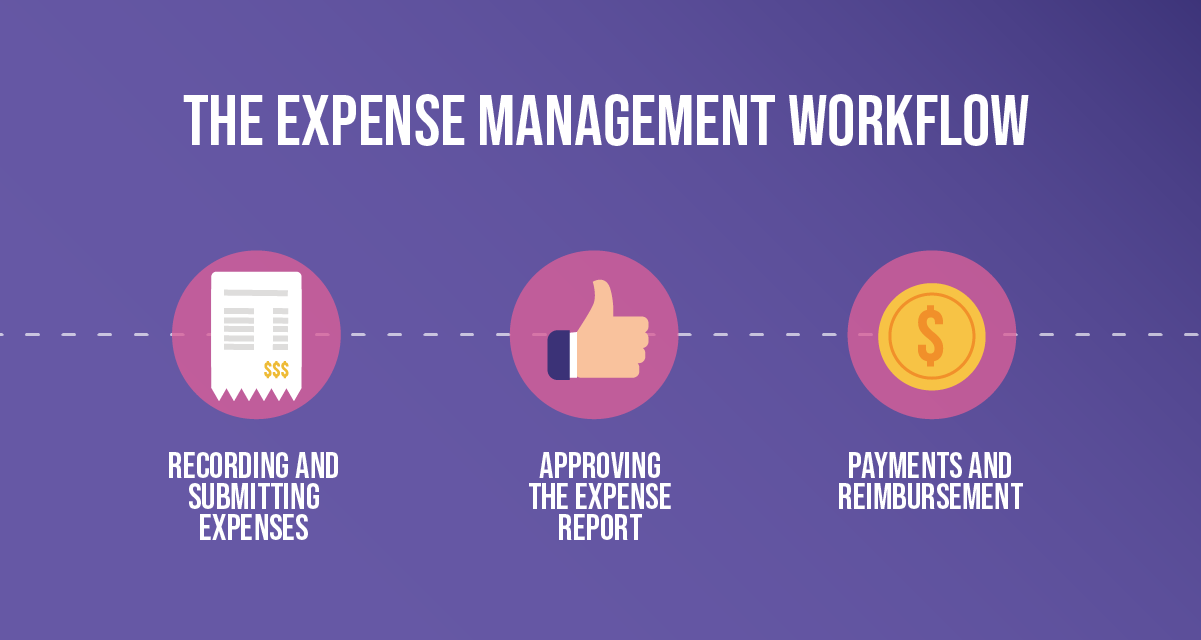
Typically, the expense management workflow in NetSuite follows three steps:
- Employees create and submit expense reports and receipts
- Approvers review and approve expense reports
- Employees are reimbursed for the expenses
The process can differ depending on which expense management products the company is using. For example, if a company issues credit cards to employees, the employee reimbursement step would be replaced by the company paying the balance on the employees’ credit cards.
The expense process begins with an employee making a purchase.
Step 1: Create expense reports and upload receipts
In NetSuite’s manual expense reporting process, employees enter expense reports in the NetSuite Employee Center. They open a new expense report and enter the expense report date and currency. Then, they enter the details for each expense: category, amount, date, and other information their company may require. They can upload copies of the receipts or select receipts from the NetSuite File Cabinet and attach them to the appropriate line item.
After completing the expense report and adding their receipts, the employee saves the expense report and submits it for approval.
How AP automation optimizes expense reporting
Financial automation platforms with expense reporting capabilities allow employees to scan receipts with a mobile app and upload them to a receipt library. Then, when completing their expense report, the employees can select the appropriate receipt image for each expense in the report.
Simple Expense Reporting With Stampli and NetSuite
Stampli Expense Management supports two employee spend paths: company-card expenses and employee-paid reimbursements. Employees can capture receipts and complete expense details, while finance keeps policy context, approval history, coding, and exceptions connected to the expense.
Stampli AI can help complete details and suggest NetSuite-aligned coding for human review. The ERP remains the system of record, including general ledger accounts, departments, classes, locations, subsidiaries, projects, and other dimensions configured for the organization.
“I like the Stampli card the most. Being able to track business expenses without having to chase down every employee for physical forms saves a ton of time,” says one Stampli customer. “Stampli is solving credit card expenses. Going from an Excel sheet that needs over 100+ physical forms with signatures is tedious and inefficient.”
For employees not using Stampli Card, the Stampli mobile app simplifies receipt capture and prevents lost receipts. Employees can scan and upload a receipt from their mobile device as they make purchases.
One customer in the transportation industry says the Stampli mobile app has transformed how they track expenses: “Stampli allows me to code and approve multiple invoices in a timely manner. I need to approve or code purchases on average 3-5 times per week. Stampli is much more user friendly than any system I have used in the past. Uploading images of receipts is easy and the camera upload on the mobile version allows receipts to be captured quickly.”
Step 2: Approve expenses
After the employee submits the expense report in NetSuite, it enters the queue for approval. If the company uses NetSuite’s Approval Routing feature, the expense report will be routed to the appropriate approver. Otherwise, NetSuite routes the report to the employee’s supervisor for approval.
The approver opens, reviews, and approves the report in the Employee Center. After the report is approved, NetSuite forwards it to Accounting for approval and reimbursement. If the approver rejects the expense report, they leave it in the approval queue and address the issue with the employee.
How Expense Automation Streamlines Approval
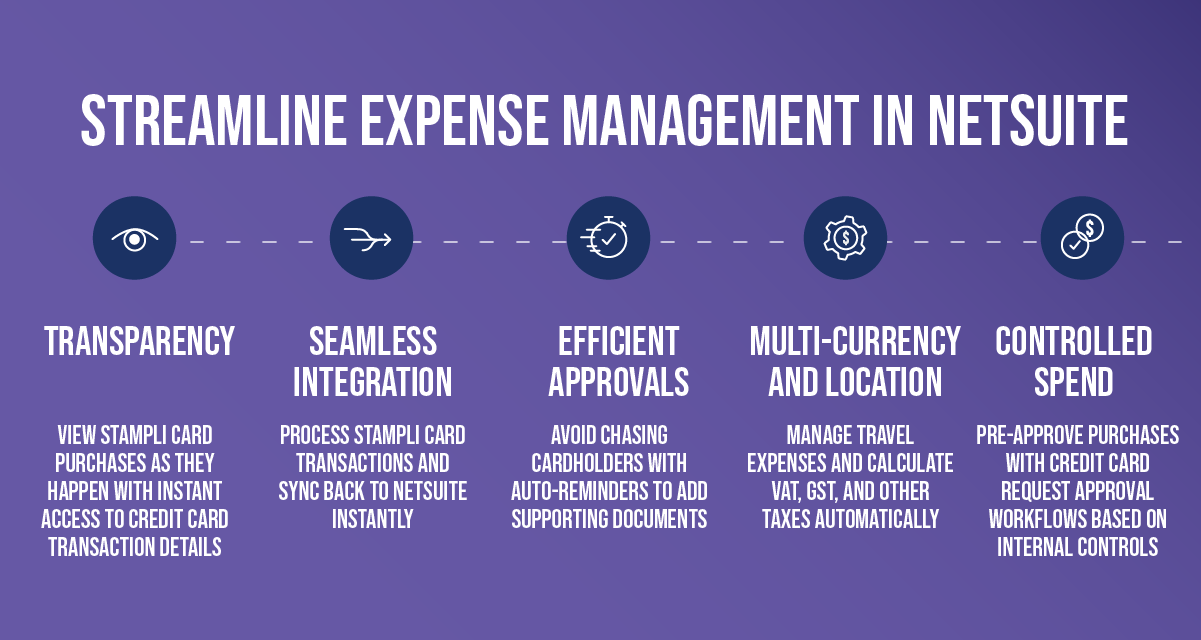
Company-card transactions and employee-paid reimbursements start differently, but both need receipts, business purpose, policy context, coding, and approval. Automated routing can send the expense to the appropriate manager and keep questions or exceptions with the transaction.
Control Expense Approvals With AP Review
Manager approval is not always the last finance control. AP Review gives finance a final point to confirm documentation, policy treatment, NetSuite coding, and any duplicate or card-overlap flags before a reimbursement is prepared for payroll or a card expense is prepared for ERP posting.
Keep Card Expenses and Reimbursements Connected
A company-card transaction is not a finished expense. Finance still needs the receipt, business purpose, policy context, coding, approvals, AP Review, NetSuite posting, and reconciliation. Employee-paid reimbursements need much of the same context before approved data is prepared for payroll.
Keeping both spend paths in one workflow helps finance resolve missing information, possible duplicates, or card overlap without moving the conversation to email or a separate spreadsheet.
One customer describes how Stampli Expense card has simplified employee expenses at their business. They say Stampli is a “One stop shop for approvals. The robust organization of the information needed for expense submission keeps the process efficient and tidy. I no longer need to chase down missing information from employees when executing my approvals. With my own expense submissions, the gentle reminders are key to stay on target with submissions as well. Great support!”
“How easy it is to submit credit card reconciliations, approve items, and submit items for reimbursement like gas mileage,” said one customer about how Stampli Card has changed their business. “I have never used another product to compare this to other than Google Sheets, this is 100 times better!
…Ease of approvals for expense management + invoice management. Everything is in one spot and is easy to navigate. It took me a few months to get used to Stampli, but now that have used it often it has increased my productivity!”
Step 3: Payments & reimbursement
Typically, organizations pay for employee expenses in one of two ways.
If an employee incurs expenses with a corporate card, the organization pays off the card balance every month. If the employee paid for the expenses out-of-pocket, the company reimburses them directly through payroll or accounts payable.
To pay corporate card expenses in NetSuite, companies must configure their accounting settings and expense report forms to allow employees to report card purchases. When the expense report is submitted and approved, NetSuite records the purchases to the corporate card account for payment.
Organizations have a couple of options for reimbursing out-of-pocket expenses in NetSuite. If they are using NetSuite’s SuitePeople US Payroll module, they can reimburse the expenses via the employee’s paycheck. If they are using another payroll solution, they can reimburse the employee via NetSuite accounts payable.
How Automation Improves Reimbursement Readiness
Automation can reduce manual handoffs between expense submission, manager approval, finance review, payroll, and NetSuite. For employee-paid expenses, Stampli prepares approved reimbursements for the customer’s payroll process. It does not pay employees directly or replace payroll. For company-card expenses, the reviewed transaction can move toward NetSuite posting and reconciliation.
Control Expenses With Connected Context
Stampli keeps transaction details, receipts, coding, approvals, comments, and exceptions connected as the expense moves forward. Finance can see whether the expense is waiting on an employee, approver, AP Review, payroll preparation, or ERP posting instead of reconstructing status from email and spreadsheets.
Prepare Each Expense for the Right Next Step
Stampli keeps company-card transaction data and employee-submitted expense details connected to receipts, coding, approvals, and exceptions. After finance review, card expenses can be prepared for NetSuite posting and reconciliation.
Out-of-pocket expenses, mileage, and per diem follow the reimbursement path. After approval and AP Review, Stampli prepares approved reimbursements for the customer’s payroll process. It does not replace payroll or issue the reimbursement payment.
Get the Most From NetSuite Expense Management With Stampli
Stampli Expense Management extends NetSuite expense reporting with a finance-ready workflow for company-card expenses and employee-paid reimbursements. NetSuite stays the system of record. Stampli carries the receipt, policy context, approval history, suggested coding, AP Review, exceptions, and audit trail needed to prepare the expense for the next step.
ERP-Aligned Integration With NetSuite
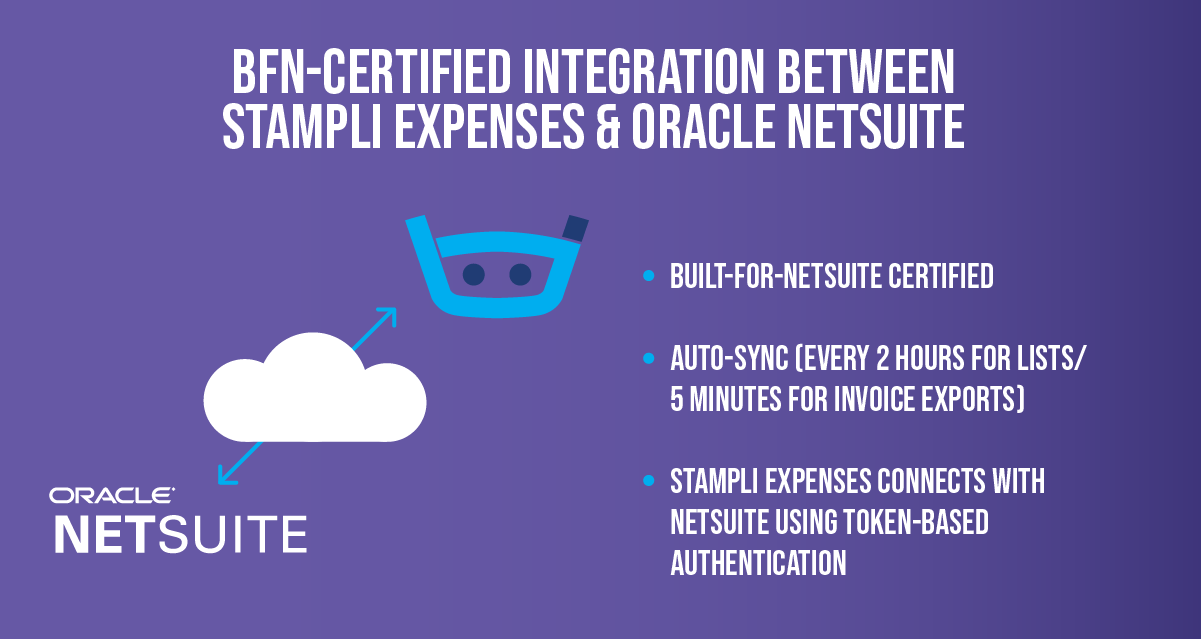
Stampli can mirror the NetSuite structures that matter to expense coding, including general ledger accounts and relevant dimensions, entities, subsidiaries, approval hierarchies, and business rules. Finance reviews and confirms the work before it is posted back to NetSuite.
That alignment matters because a correct expense amount can still create cleanup when the department, class, location, project, subsidiary, or other dimension is wrong. Bringing those choices into the review workflow helps finance catch coding questions before they become a posting or close issue.
Flexibility for Your Expense Management Needs
Expense policies and approval paths vary by employee, amount, expense type, department, entity, and location. Stampli supports configurable workflows so organizations can route routine expenses efficiently and give exceptions the additional review they need. Oracle’s SuiteFlow overview explains how NetSuite workflows use record states, actions, and transitions, including approval processes.
For example, a routine meal under policy may need a manager approval and AP Review, while an out-of-policy hotel charge may need an additional finance or budget-owner decision. The workflow should make the difference visible without forcing every expense through the most complex path.
Work With Existing NetSuite Processes
The goal is to extend the organization’s NetSuite environment, not replace it. During implementation, finance and IT should map employee records, coding dimensions, subsidiaries, approval logic, posting behavior, and payroll handoffs so the workflow fits the company’s accounting design.
The team should also decide which status changes move between systems, how rejected or corrected expenses are handled, who owns reconciliation, and what evidence needs to remain available for auditors. These decisions are as important as the technical connection itself.
Handle Multi-Entity Expense Context
Organizations using NetSuite OneWorld can carry subsidiary and other relevant coding context into the expense workflow. Finance should verify tax treatment, currency, intercompany considerations, and posting rules according to its NetSuite configuration and accounting policies.
Employees should not have to understand every accounting nuance, but the workflow should collect enough context to route the expense correctly. Finance can then review entity and dimension choices before the expense reaches NetSuite.
Maintain Reviewable Access and Audit Context
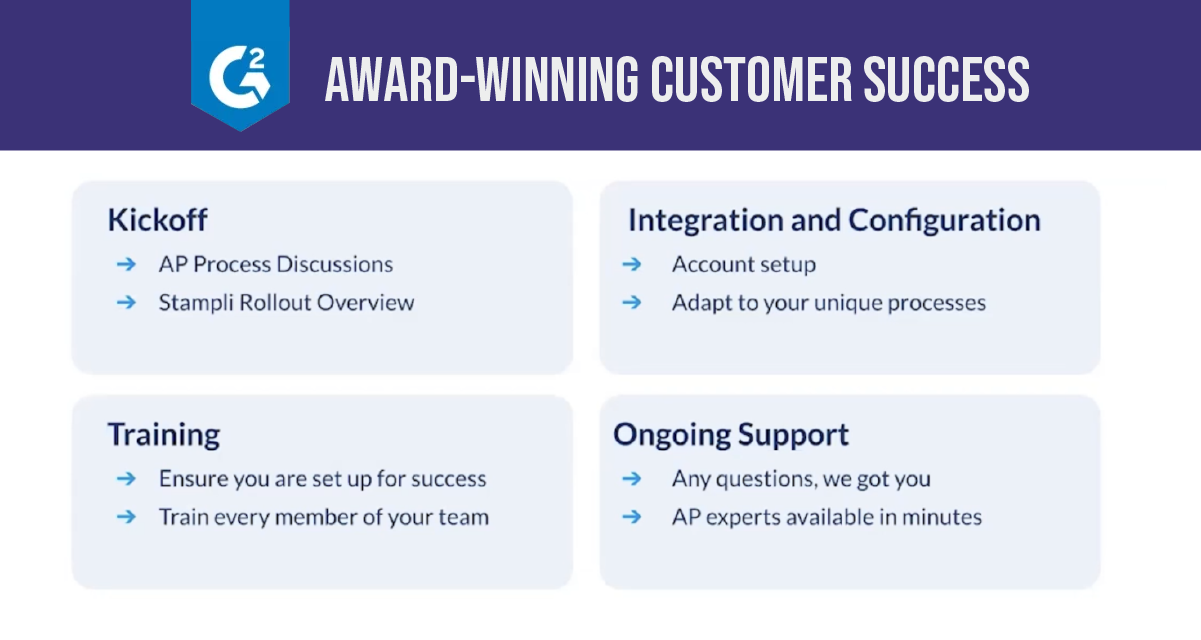
Role-based access, approval history, coding changes, receipts, comments, and exception decisions should remain reviewable. Confirm the exact authentication, permission, retention, and security requirements for your environment during technical evaluation.
A reviewable history also helps during month-end close. AP can see which card transactions are still missing receipts, which reimbursements are waiting on approval, and which expenses are not yet ready for posting or payroll preparation.
Evaluate Fit for Finance Operations
The bottom line: the right NetSuite expense management workflow should make it easier for employees to submit expenses and easier for finance to review, code, prepare, post, and audit them. Book a Stampli demo to evaluate the workflow against your NetSuite configuration.
Use the demo to test real examples from several subsidiaries, expense types, approval paths, and coding scenarios, including an exception that must be corrected before posting.